
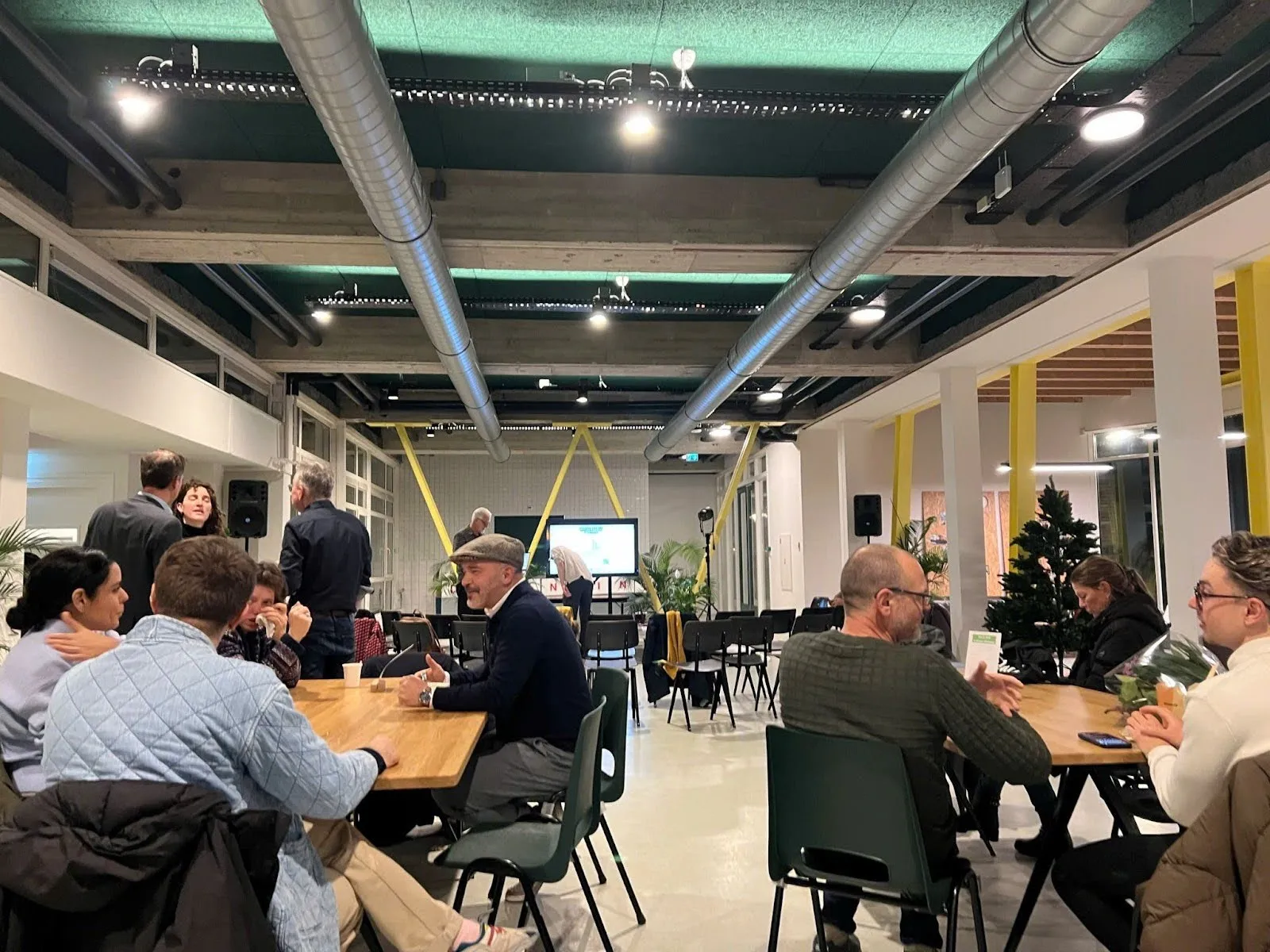
The project leader of Women4Mangrove – Nguyen Thi Thu Thuy (Kathy) had the privilege to participate in an event organized around Community Wealth Building (CWB) in Amsterdam Nieuw-West on 4th December 2025. The event brought together over 40 participants, included social entrepreneurs, professionals and stakeholders from diverse backgrounds: community members, local organisations, and anchor-institutions such as schools, health providers, housing cooperatives — all exploring how to build a stronger, more equitable and locally rooted economy.
Throughout the event, W4M heard inspiring examples — including from the UK where long-standing CWB initiatives have helped communities reclaim economic agency, create stable livelihoods, and reinvest wealth locally.
Workshops covered practical themes such as:
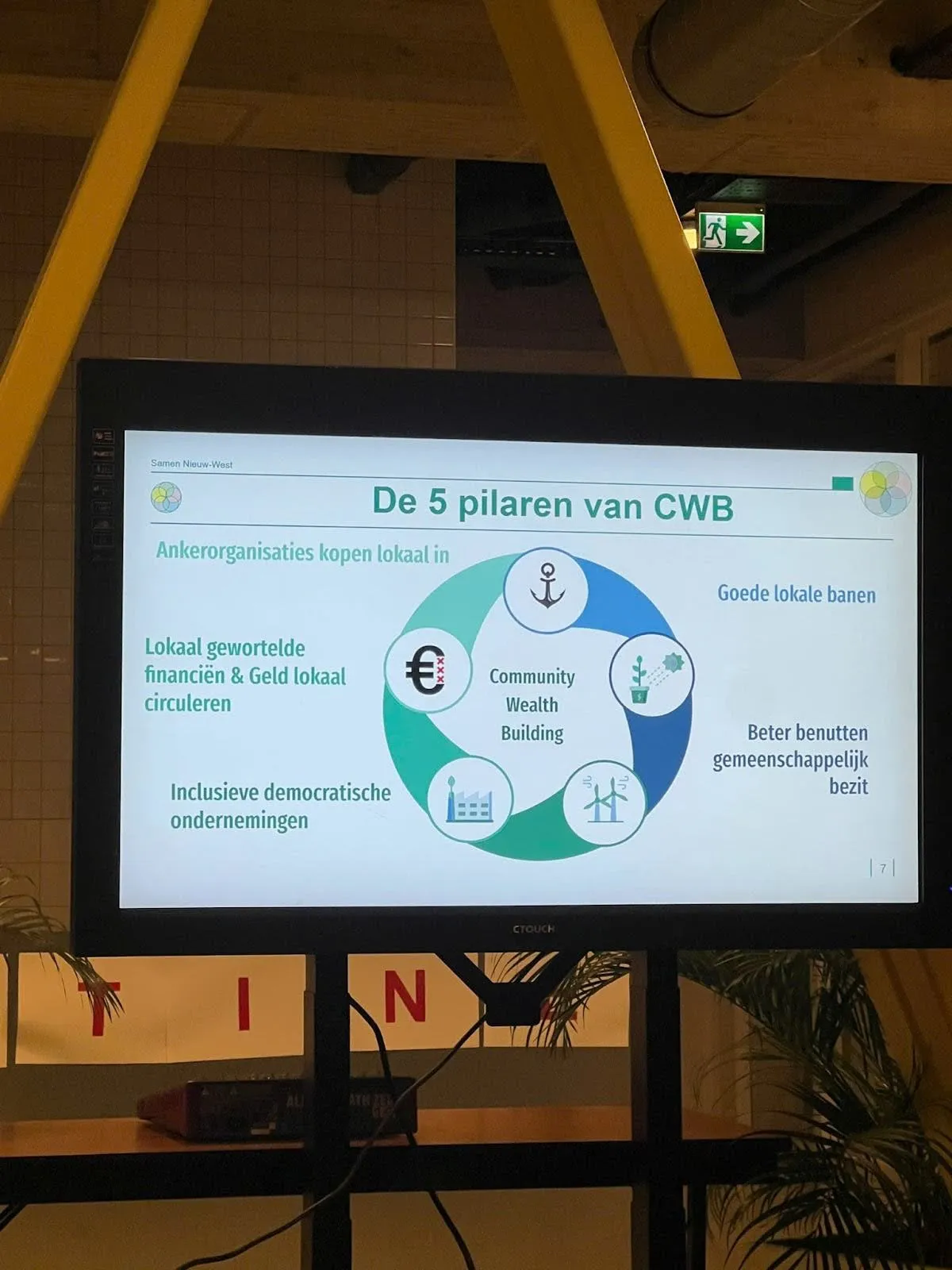
- how to build networks of cooperative enterprises;
- how local “anchor-institutions” can shift procurement to local suppliers;
- ways to structure fair work with living wages;
- and models for collectively owning and managing assets such as land or buildings.
The atmosphere was enthusiastic, open and forward-looking: people from very different backgrounds — artists, social workers, grassroots entrepreneurs, housing-cooperative representatives — were discussing concrete steps forward. There was also recognition that this approach requires time, shared commitment, and trust building: CWB is not a quick fix but a long-term, systemic transformation.
Key Lessons & Ideas — What Women4Mangrove Can Take From CWB for Cù Lao Dung
Based on what W4M learned at the event and how CWB is framed in Amsterdam, our project leader sees many parallels and opportunities for Women4Mangrove. Here are some insights and ideas for adaptation:
• Local economic circulation: keep value in the community
CWB emphasizes that money earned in a community should largely stay there — through local procurement, local supply chains, and locally owned enterprises — rather than flowing out to distant corporations.
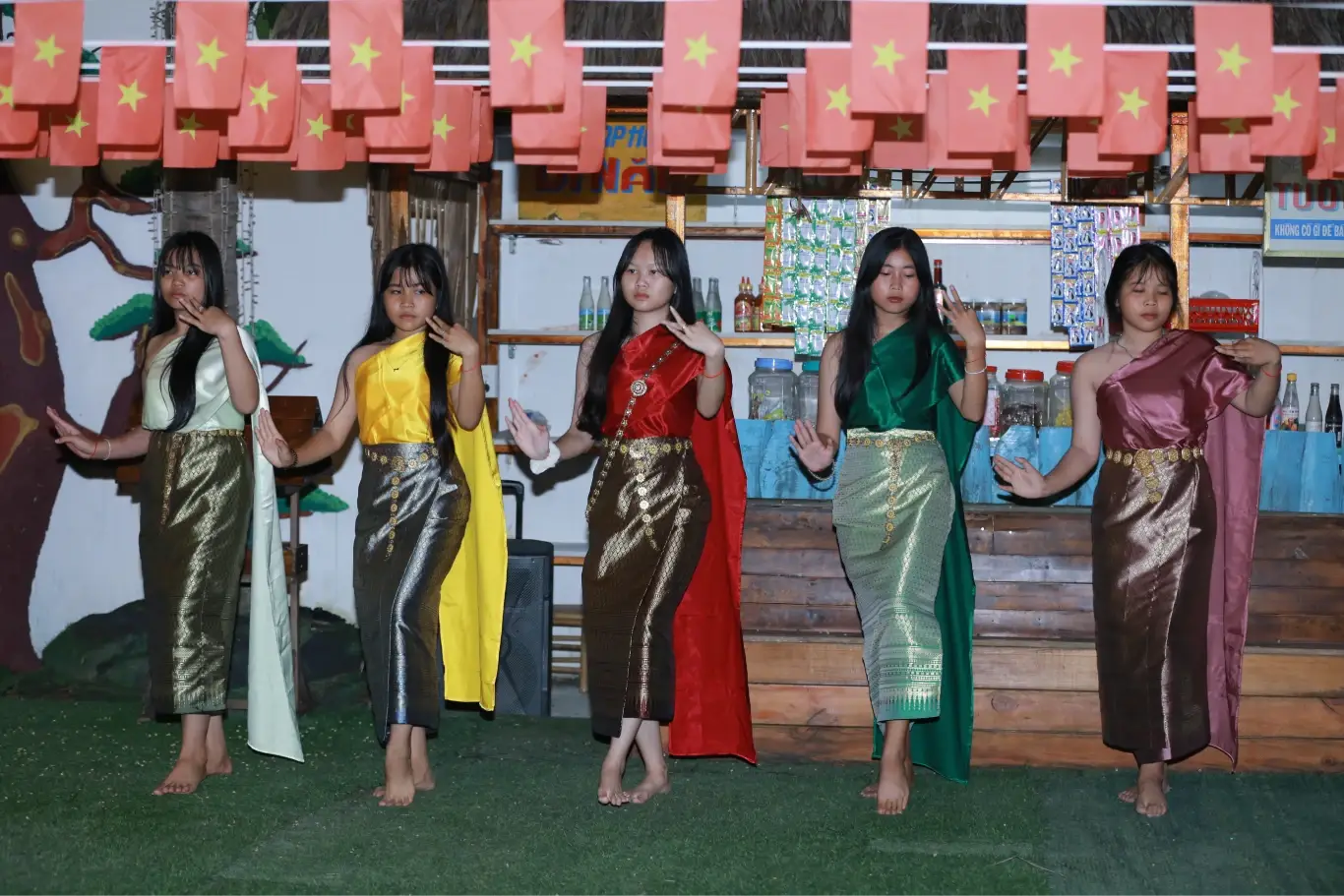
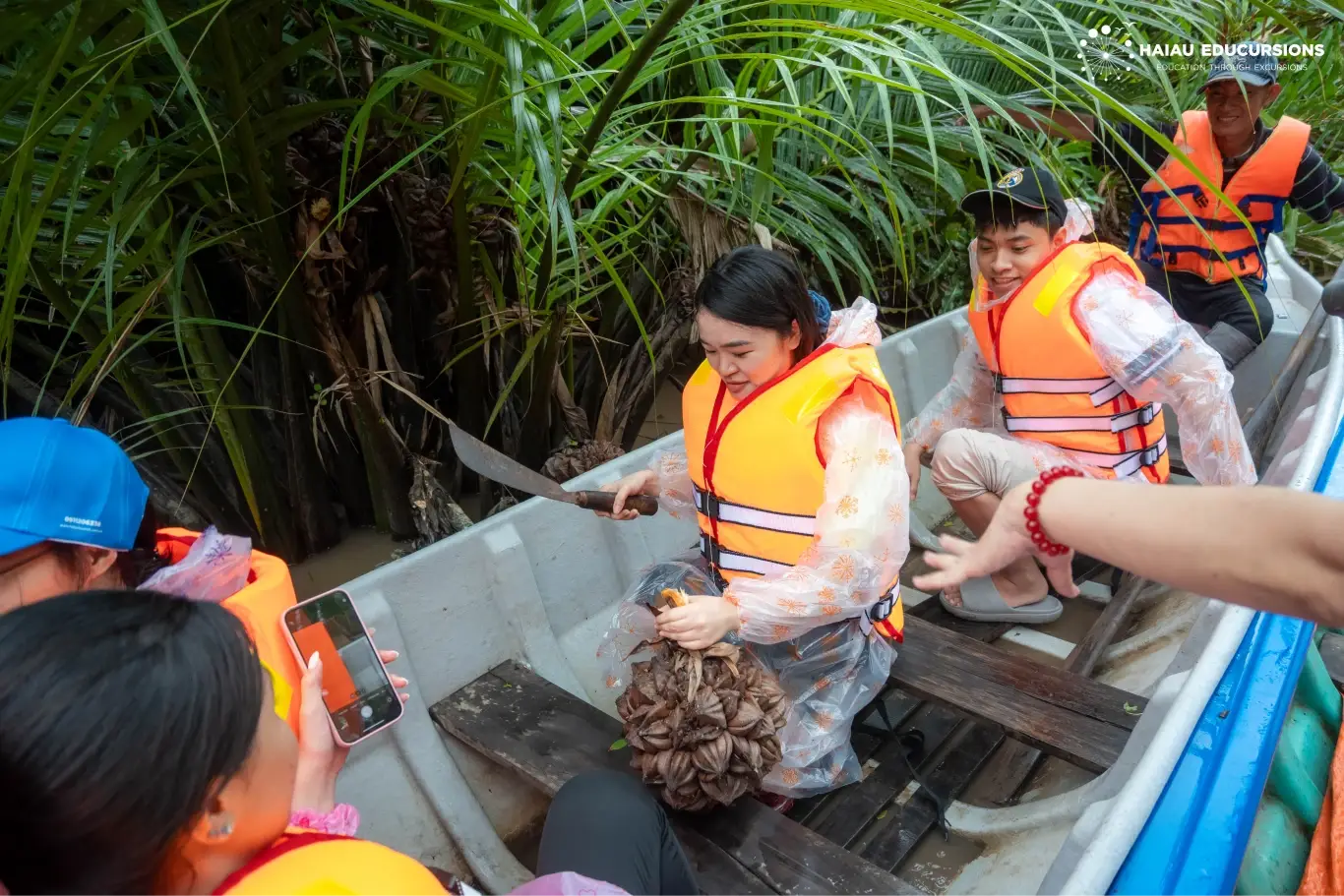
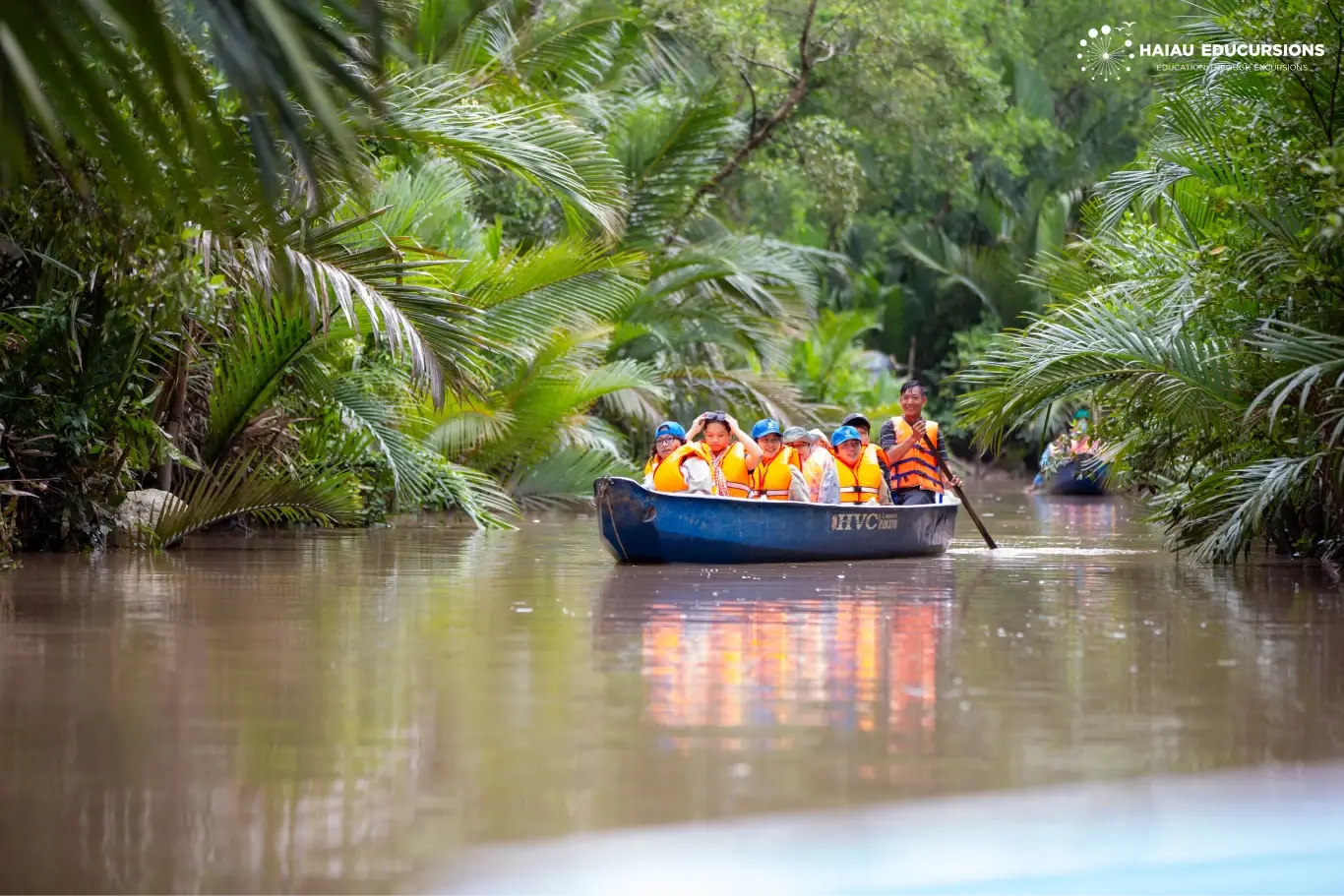
For Women4Mangrove: this reinforces our model of empowering local women to lead mangrove restoration, produce goods (like herbal tea), run homestays, eco-tours — so that income, benefits, and decision-making remain in Cù Lao Dung. This helps build resilience from within, rather than relying on external investments that may not stay long-term.
• Cooperatives / community-owned enterprises & shared ownership
One of the core pillars of CWB is building a “network of cooperative enterprises” and promoting community or cooperative ownership rather than privately held, extractive business models.
Translating this to Women4Mangrove: we could explore structuring certain activities — e.g., the mangrove-nursery, agro-product processing, or ecotourism services — as cooperatives or community-owned ventures. That would give local women collective ownership, shared responsibility, and a stronger voice in how resources and profits are distributed.
• Engaging “anchor institutions” / larger buyers to support local economy
In Amsterdam’s CWB approach, large organizations (anchor-institutions such as hospitals, schools, housing corporations) play a key role by using their purchasing power to buy from local businesses — thereby sustaining local entrepreneurs.
For Women4Mangrove, the equivalent could be engaging government agencies, local tourism boards, eco-tourism networks, or businesses (e.g. hotels, restaurants) to source goods and services from Cù Lao Dung’s women-led enterprises — for example herbal teas, sustainable seafood, or community-led tours. This could create stable demand and strengthen links between conservation, community livelihoods, and broader value chains.
• Fair work, inclusive participation & shared decision-making
A major focus of CWB is to build economies that are democratic, inclusive, and fair — not just profit-driven.
In our context, this underscores why Women4Mangrove’s emphasis on women’s leadership, capacity building (business skills, financial literacy, leadership), and community ownership is so important. It’s not only about restoring mangroves — but also about enabling social justice, gender equity, and long-term wellbeing for local families.
• Long-term systemic change rather than quick fixes
Participants at the CWB event stressed that building a local, fair economy is a gradual, multi-year effort, requiring patience, trust, cooperation, and structural support.
For Women4Mangrove, this is a realistic reminder that ecosystem restoration + community development are intertwined and evolving. Our work on Cù Lao Dung must be seen as a long-term investment — not only in trees, but in people, social infrastructure, livelihoods, and community ownership.
Next Steps — What We Could Do After This Inspiration
Building on this experience, consider the following actions for Women4Mangrove:
- Organise a small internal workshop with our team and local women (on Cù Lao Dung) to discuss whether a cooperative-based/social enterprise structure might work for certain parts of our operations (nursery, products, ecotourism).
- Map out potential “anchor-institution” partners in our region (local government, hotels/resorts, tourism operators, NGOs) who could commit to sourcing from women-led enterprises — helping to build stable demand.
Strengthen capacity-building programs: offer training not only in conservation and ecology, but also in business skills, cooperative governance, financial management – to enable long-term sustainability and local control. - Monitor and evaluate not only ecological outcomes (mangrove restoration) but socio-economic impact: income distribution, livelihoods, women’s empowerment, community ownership – to reflect the holistic meaning of “wealth” in our community.
- Share with our network (donors, supporters, visitors) the story of how our work is inspired by this global movement of community-rooted, equitable, regenerative development — linking local Vietnamese mangrove conservation with global frameworks like CWB.
Conclusion
Attending the Community Wealth Building event in Amsterdam has been a valuable source of inspiration. The principles — local control, community-owned enterprises, fair work, inclusive participation and long-term systemic change — resonate strongly with the mission and ambition of Women4Mangrove.
W4M members believe that combining ecological restoration with economic justice, cooperative ownership, and community empowerment can not only heal the mangrove ecosystem but also contribute to sustainable livelihoods and social resilience for generations to come on Cù Lao Dung.