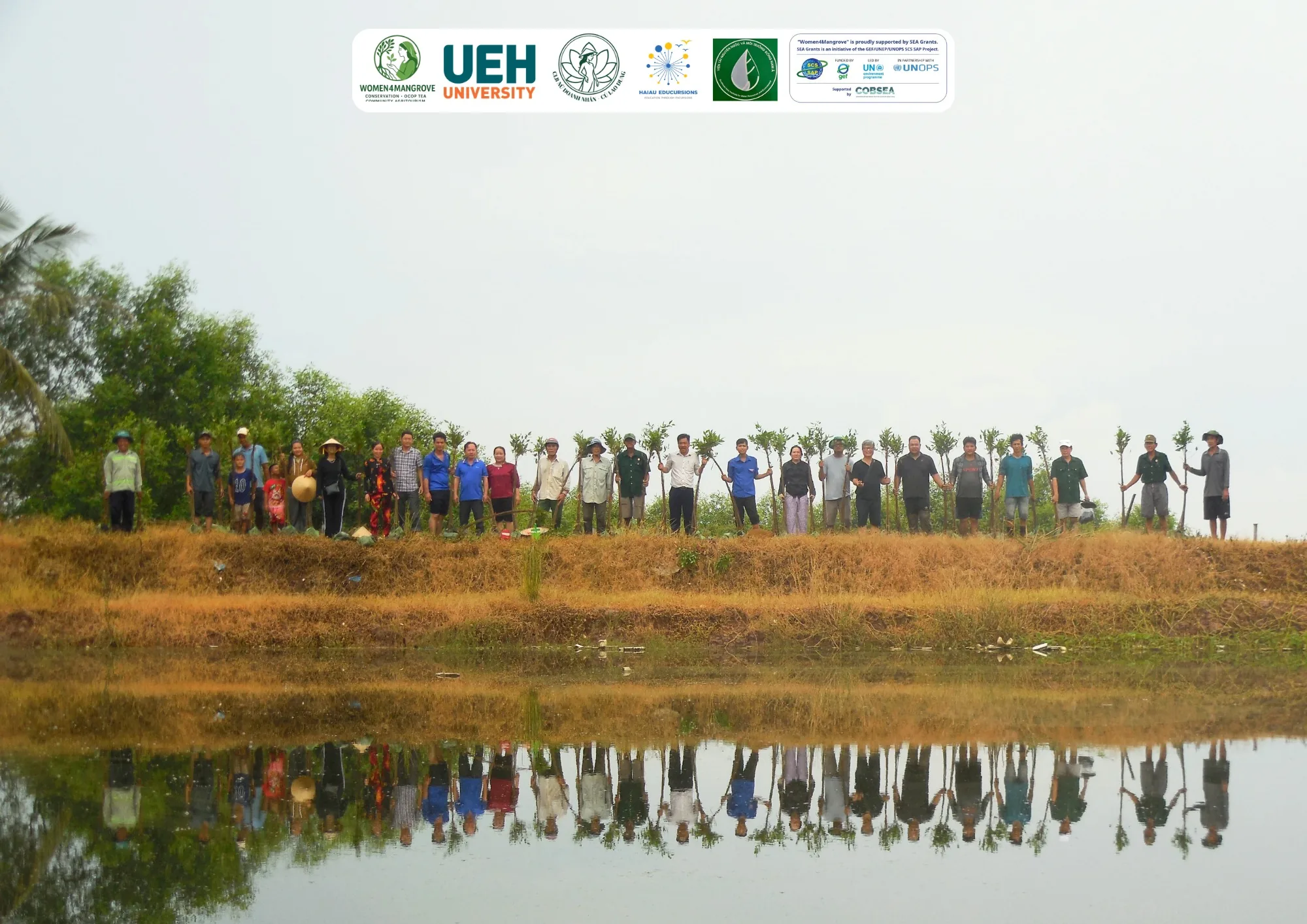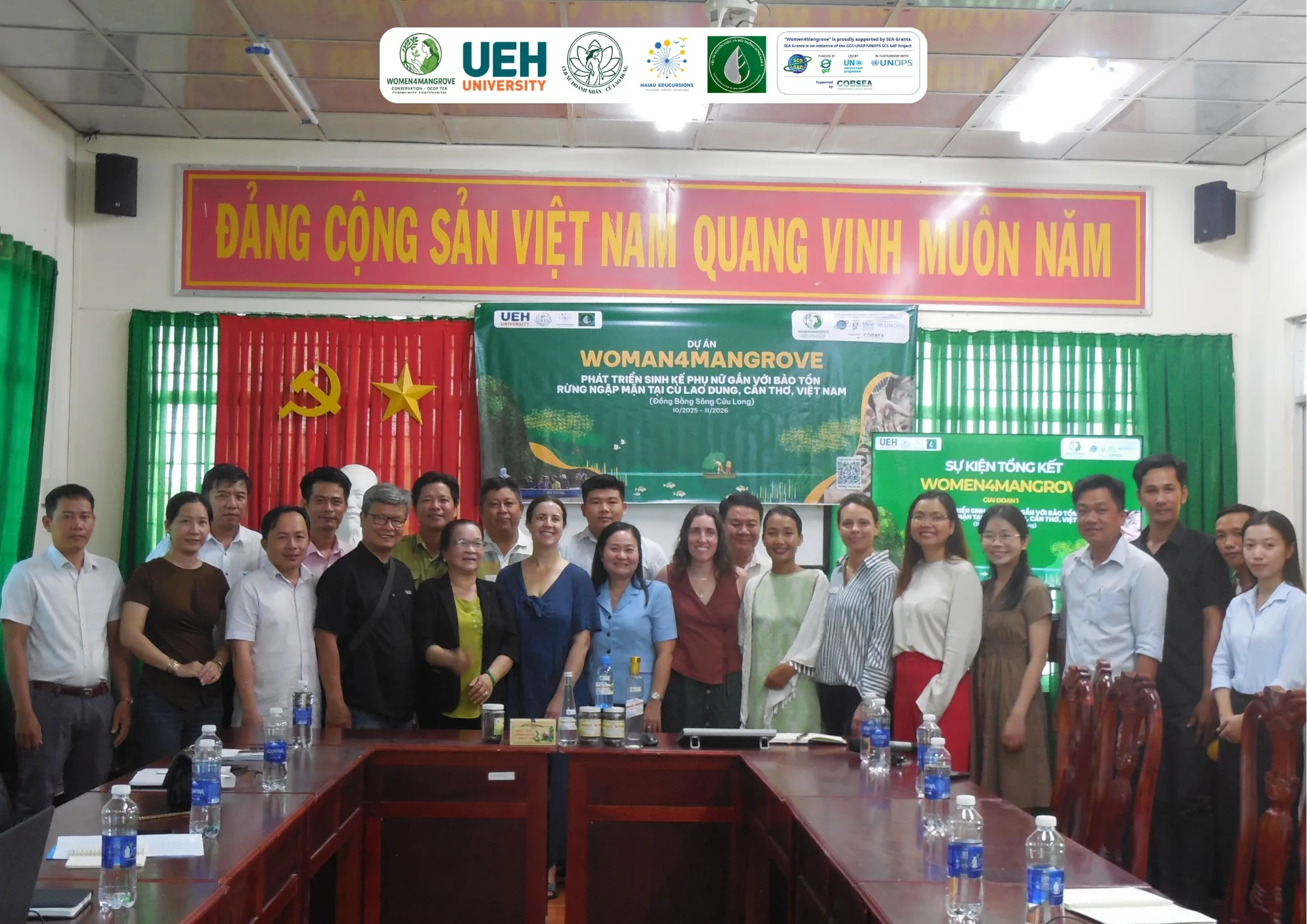
On August 13–14, 2026, Women4Mangrove had the honor of welcoming Dr. Leon Hauser from the Department of Geography, University of Zurich, Switzerland, for a field visit to the mangrove ecosystem, nursery, and community center of Women4Mangrove in Cu Lao Dung, Can Tho City, Vietnam.
The field visit provided an opportunity to explore the unique Cu Lao Dung mangrove ecosystem, learn about local livelihoods and climate change adaptation, and discover the distinctive Khmer culture of the local community.
Exploring the Cu Lao Dung Mangrove Ecosystem
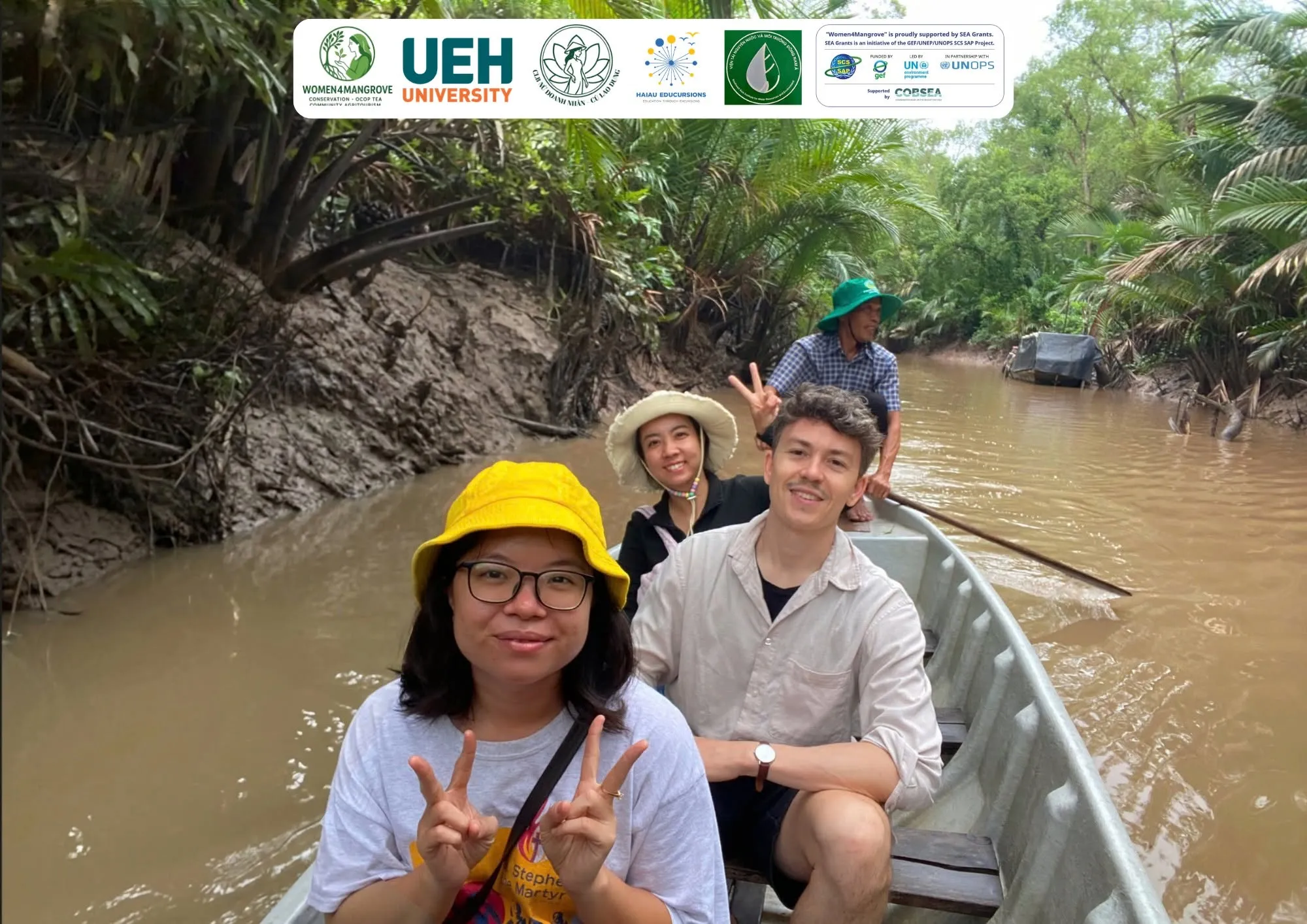
During the field trip, Dr. Leon Hauser joined members of Women4Mangrove and representatives of the Cu Lao Ecological Agriculture and Community Tourism Cooperative on a boat journey through areas affected by landslides in An Thanh Commune and Cu Lao Dung.
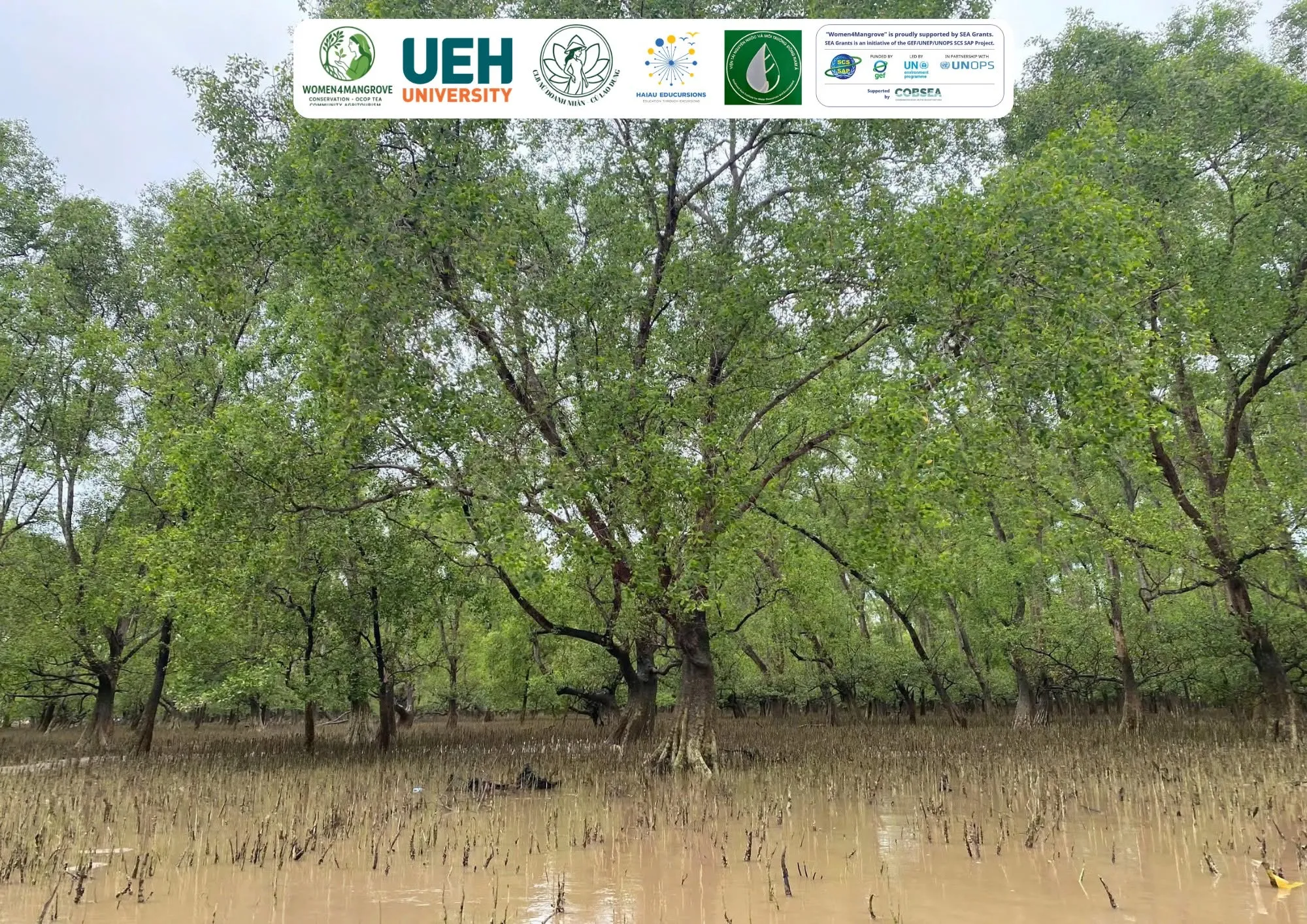
The team visited mangrove forests and explored the ecosystem beneath the canopy, gaining first-hand insights into the ecological importance of mangroves in protecting riverbanks and supporting biodiversity.
At low tide, the intricate root systems of mangrove trees and nipa palms became clearly visible. Some of these trees are estimated to be 30 to 40 years old, forming dense canopies and complex habitats along the waterways.
The richness of life beneath the mangrove canopy was particularly impressive. Crabs, fish, and other organisms thrive in the muddy river environment, demonstrating the important role that mangrove forests play in maintaining coastal and riverine biodiversity.
A Unique Mangrove Landscape in Vietnam
With many years of living and conducting research in Vietnam, Dr. Leon Hauser has developed a strong interest in mangrove forests and their ecological systems.
During the field visit, he was impressed by the scale and uniqueness of the mangroves in Cu Lao Dung. Compared with other mangrove areas he has visited in Vietnam, the mangrove forests and ecosystem of Cu Lao Dung stood out for their remarkable size, age, biodiversity, and natural characteristics.
This experience highlighted the importance of continued research and conservation efforts to protect mangrove ecosystems in the Mekong Delta.
Connecting Mangrove Conservation with Local Livelihoods
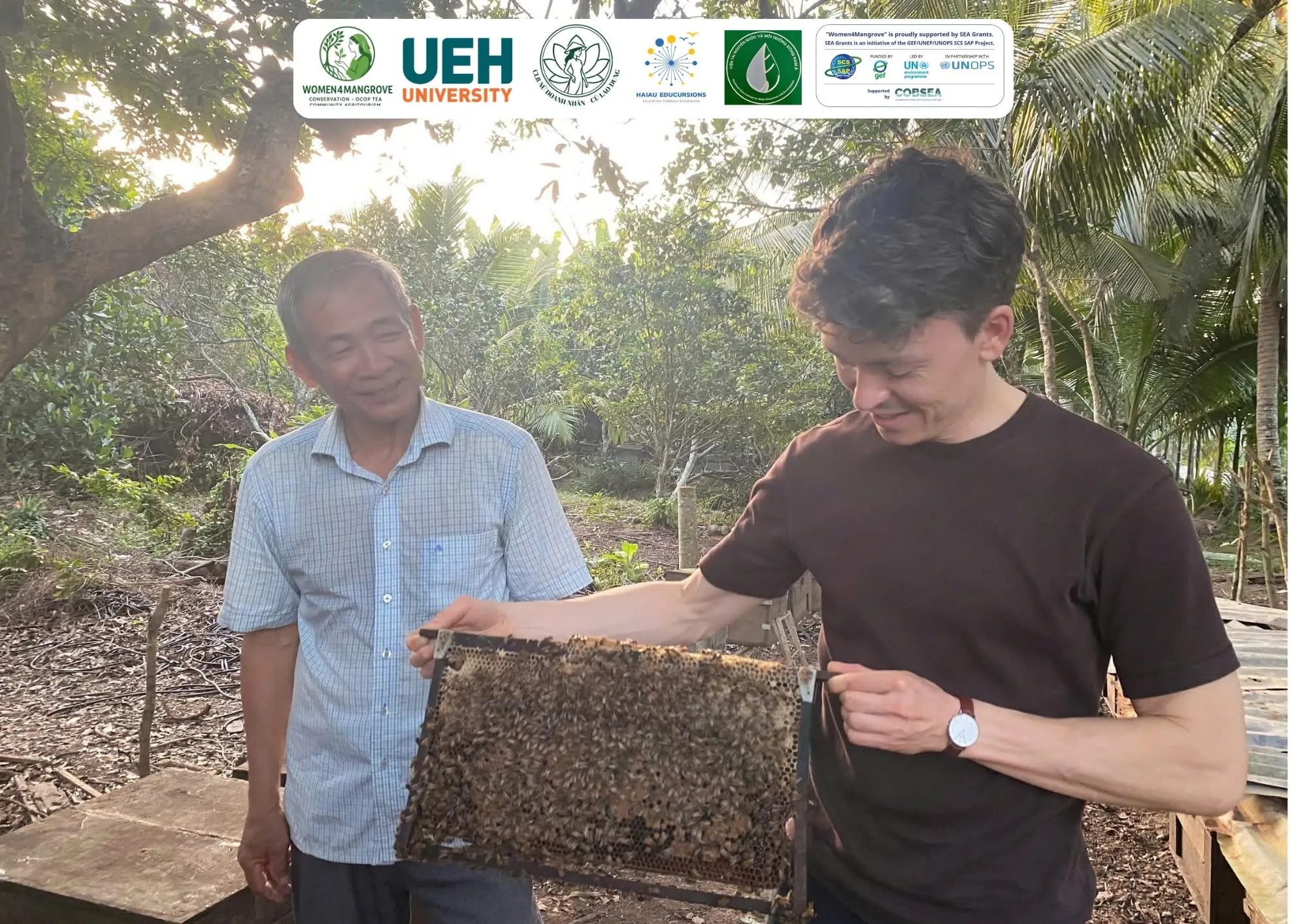
The field visit was not limited to the forest ecosystem. Dr. Leon Hauser and the Women4Mangrove team also visited local community livelihood models and learned more about how residents are adapting to the impacts of climate change.
The Mekong Delta is experiencing increasing environmental pressures, including erosion, landslides, changing water conditions, and other climate-related challenges. For communities living along waterways, mangrove forests can provide important ecological functions while supporting sustainable livelihoods.
By connecting mangrove conservation, community-based livelihoods, climate change adaptation, and local cultural heritage, Women4Mangrove aims to contribute to a more sustainable future for communities in the Mekong Delta.
The field team also exchanged perspectives with local officials to better understand the relationship between forest conservation and urban development in Cu Lao Dung.
Learning from Local Communities and Khmer Culture
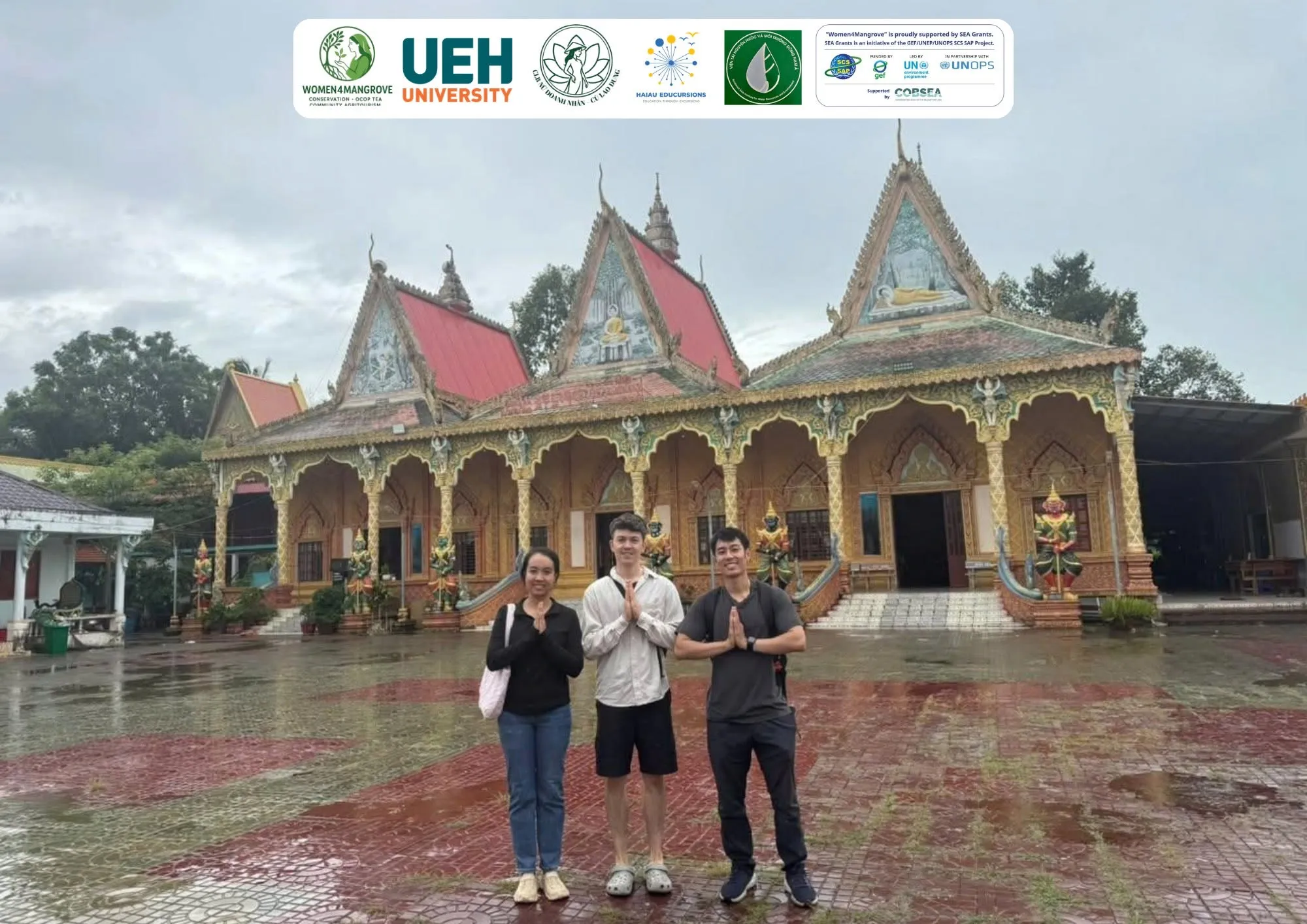
Another important aspect of the visit was learning about the lives, traditions, and cultural identity of local people, including the unique Khmer culture in Cu Lao Dung.
Understanding local communities is essential to effective environmental conservation. Mangrove protection is not only about restoring trees and ecosystems; it is also about recognizing the knowledge, livelihoods, culture, and aspirations of the people who live alongside these forests.
For Women4Mangrove, community participation and women’s engagement are central to creating long-term and locally rooted solutions for mangrove conservation.
Building International Collaboration for Mangrove Research
Women4Mangrove was delighted to accompany Dr. Leon Hauser during his field visit and to share experiences from the Cu Lao Dung mangrove landscape.
The visit is expected to provide a foundation for future international collaboration between Women4Mangrove, the University of Economics Ho Chi Minh City (UEH), and the University of Zurich, Switzerland.
One of the anticipated outcomes is collaboration around the International Conference on Mangrove Horizons, scheduled for October 20–23, 2026.
The conference and related activities will provide an opportunity for researchers, practitioners, communities, universities, and organizations to exchange knowledge and perspectives on mangrove ecosystems, conservation, climate change, and sustainable development.
Looking Ahead: Protecting Mangroves Through Knowledge and Collaboration
The field visit to Cu Lao Dung demonstrated how valuable direct engagement with mangrove landscapes and local communities can be.
From the dense roots beneath the waterline to the diverse organisms living in the mud, from community livelihood models to local cultural traditions, the Cu Lao Dung mangrove ecosystem represents a complex connection between nature, people, culture, and climate resilience.
Women4Mangrove looks forward to strengthening collaboration with national and international partners to promote knowledge sharing, research, community participation, and sustainable mangrove conservation.
🌿 Through collaboration, research, and community action, we can help protect mangrove forests for future generations.
For more information about upcoming international collaborations and the International Conference on Mangrove Horizons, follow Women4Mangrove and visit the official event website: mangrovizon.ch.