
How the Women4Mangrove Initiative Is Restoring Ecosystems Through Science, Community, and Regenerative Action
Along the coastlines of Vietnam’s Mekong Delta, mangrove forests quietly perform some of the most important environmental functions on Earth.
They protect coastal communities from storms.
They absorb and store carbon.
They filter polluted water.
They support fisheries and biodiversity.
And they sustain generations of local livelihoods.
Yet despite their enormous ecological value, mangrove ecosystems remain among the world’s most threatened environments.
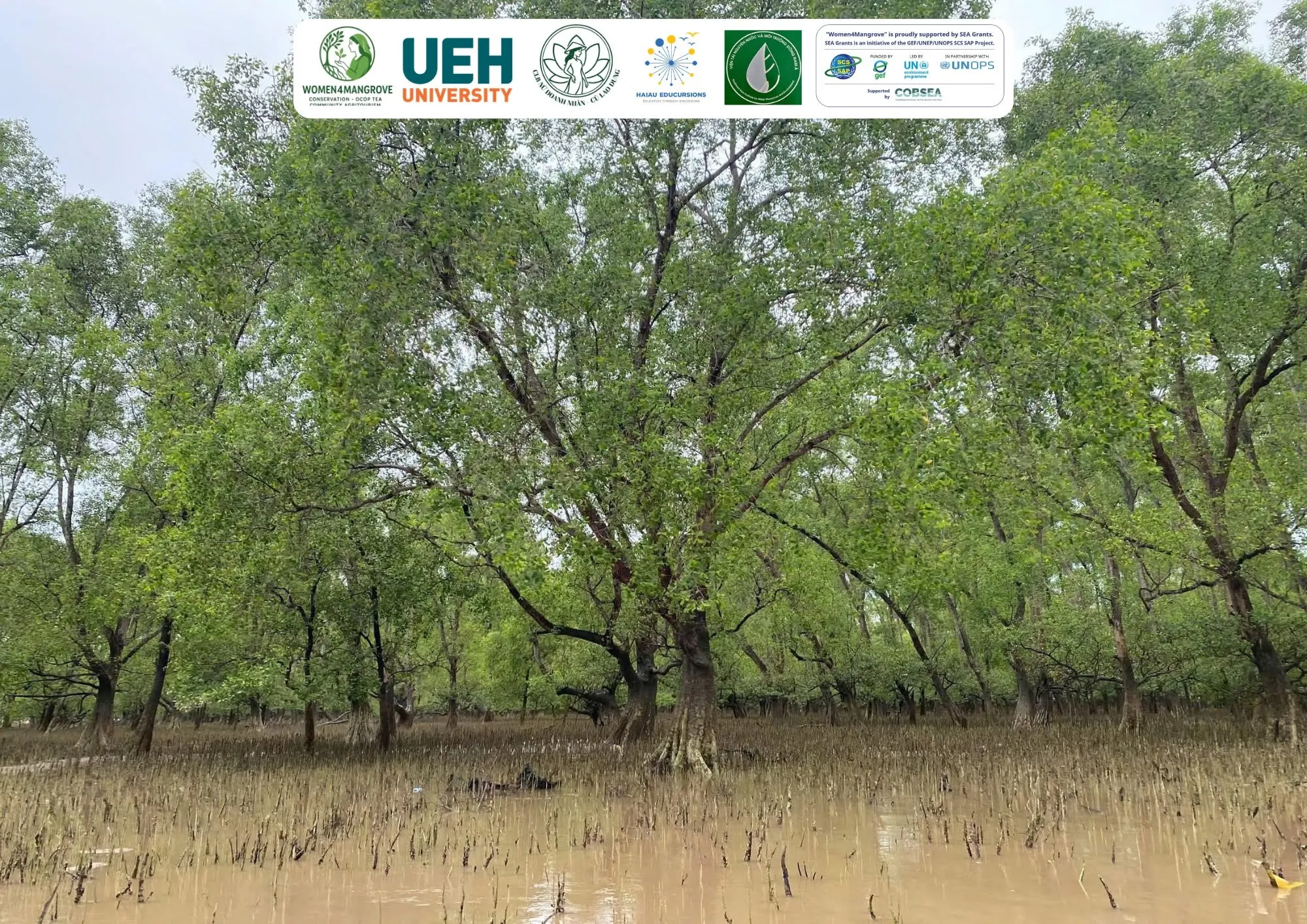
In Cù Lao Dung Island — home to one of Vietnam’s largest Sonneratia caseolaris mangrove ecosystems — environmental degradation, climate change, plastic pollution, and unsustainable land exploitation continue to threaten both nature and community resilience.
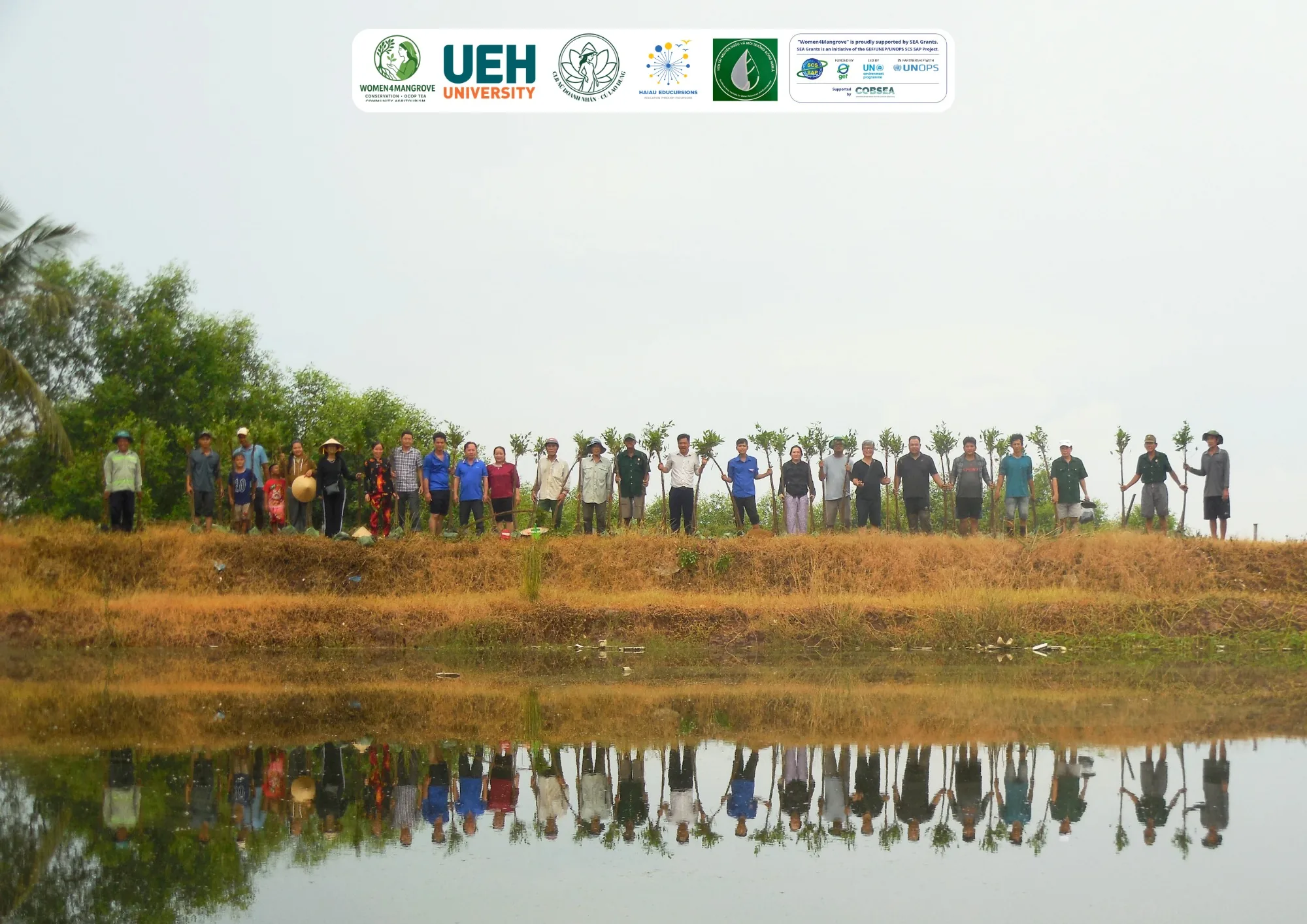
Through the Women4Mangrove initiative, local communities are proving that restoring mangroves is not only about protecting trees — it is about rebuilding relationships between people, ecosystems, and future generations.
The Remarkable Life Cycle of a Mangrove Tree
Mangrove ecosystems are built on resilience.
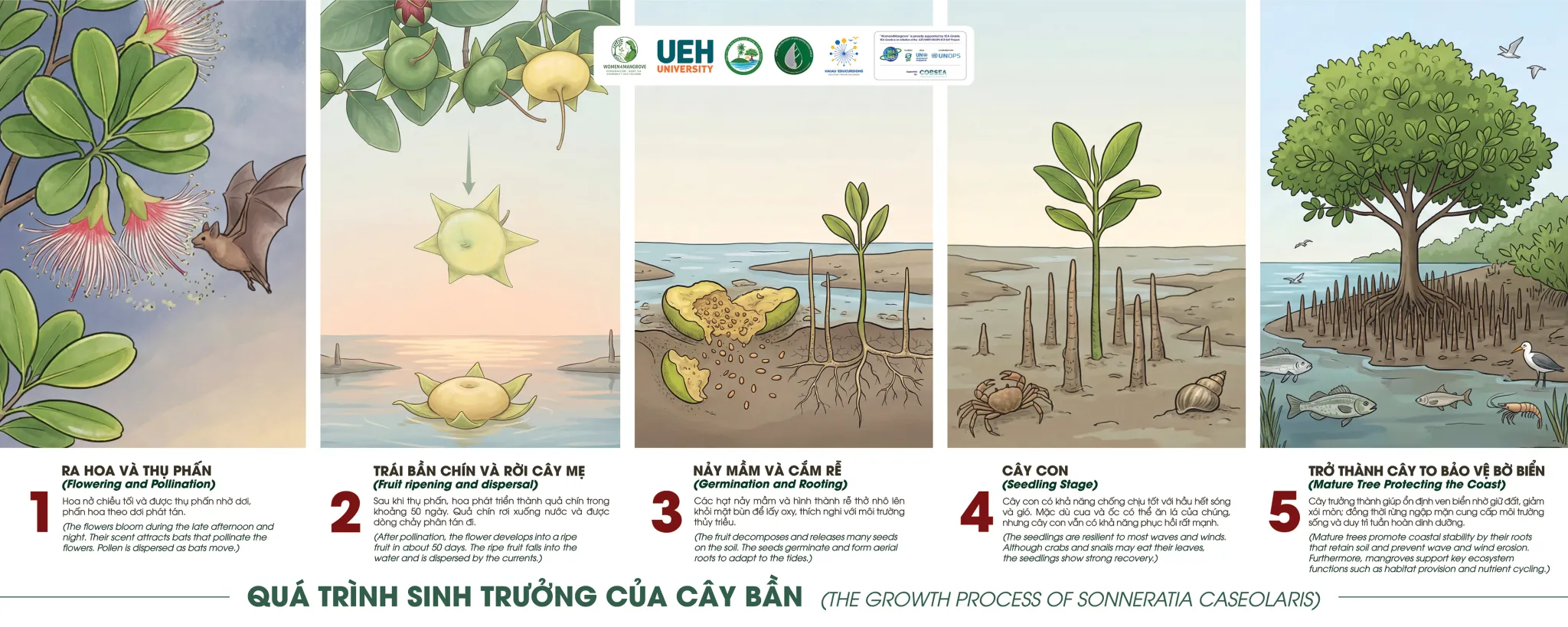
The educational infographics developed by Women4Mangrove illustrate the fascinating growth cycle of Sonneratia caseolaris, commonly known as the mangrove apple tree.
The cycle begins with flowering and pollination, often assisted by bats that spread pollen during nighttime feeding. After pollination, the fruit matures and eventually falls into the water, where tides help disperse seeds across mudflats and riverbanks.
Once conditions are suitable:
- Seeds germinate in muddy coastal soil
- Young roots adapt to tidal flooding
- Seedlings develop aerial roots for oxygen exchange
- Mature trees eventually stabilize coastlines and create habitats for wildlife
What appears to be a simple coastal tree is actually a sophisticated survival system designed to thrive in some of the harshest environmental conditions on Earth.
And every stage of this process supports biodiversity.
Crabs, shrimp, mudskippers, shellfish, birds, insects, monkeys, and fish all depend on mangrove ecosystems for shelter, feeding, or reproduction.
Mangroves are not isolated organisms.
They are living ecological cities.
Why Mangroves Matter More Than Ever
Mangrove forests provide ecosystem services that directly affect human survival.
Natural Coastal Protection
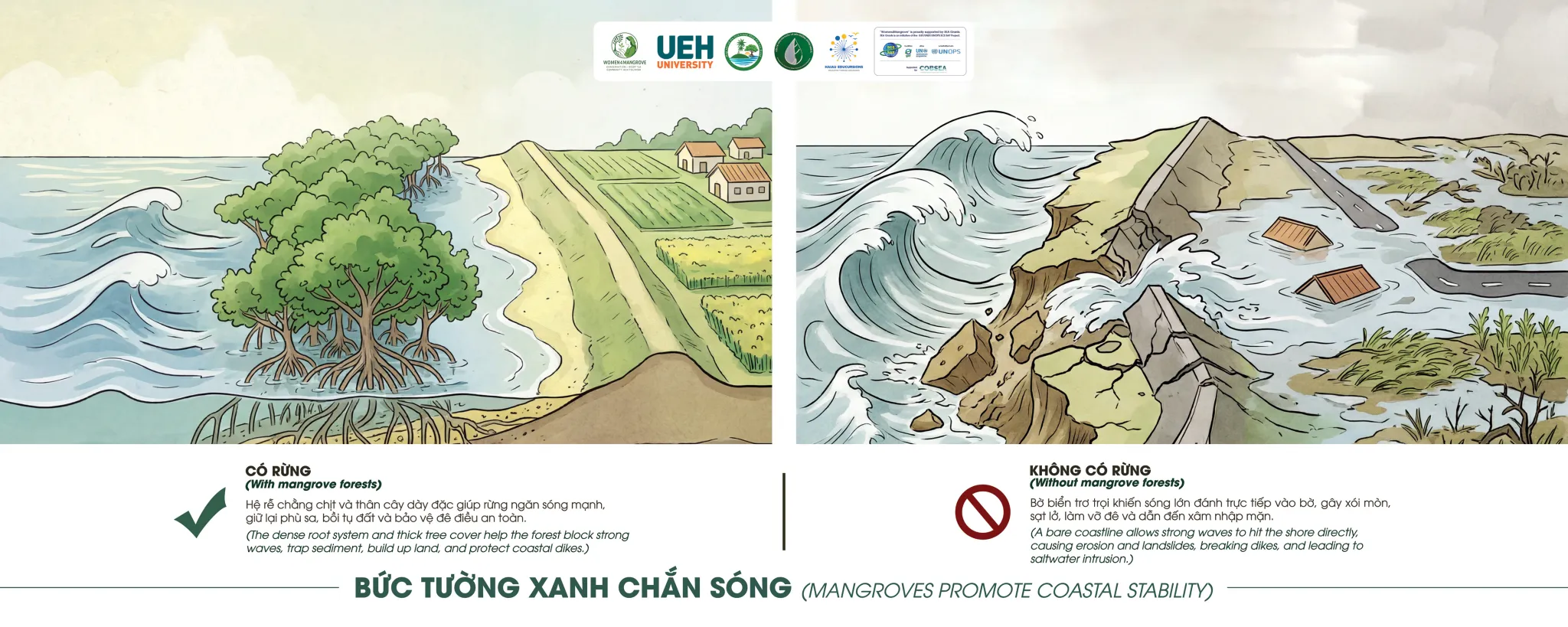
Mangroves act as a “green wall” against wave energy and coastal erosion.
Their dense root systems trap sediment, stabilize shorelines, and reduce the destructive force of storms. Scientific research conducted in Cù Lao Dung confirms that mangroves significantly reduce wave energy and help protect vulnerable coastal areas from erosion and saltwater intrusion.
Without mangroves:
- Coastal erosion accelerates
- Storm damage increases
- Salinity spreads into farmland
- Infrastructure becomes more vulnerable
In regions already experiencing climate instability, mangroves are becoming essential natural infrastructure.
Carbon Storage and Climate Action
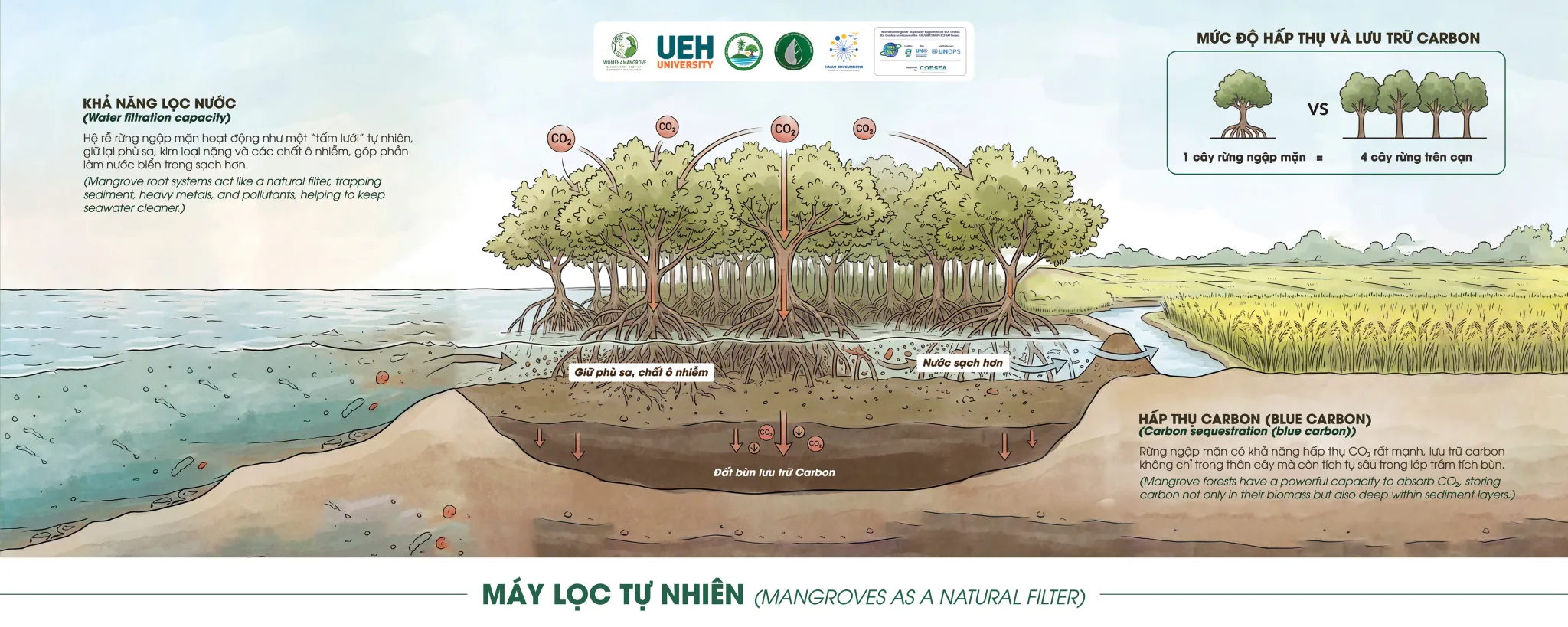
Mangrove ecosystems are also powerful “blue carbon” reservoirs.
According to the Women4Mangrove educational materials, mangrove forests can absorb and store significantly more carbon than many terrestrial forests because carbon accumulates both in tree biomass and deep within sediment layers.
This makes mangrove restoration an important strategy for climate mitigation.
The Women4Mangrove project is increasingly connected to conversations around blue carbon, climate resilience, and sustainable coastal policy.
Water Filtration and Ecosystem Health
Mangrove root systems naturally filter sediment, pollutants, and excess nutrients from coastal water systems.
The roots act like living filtration networks:
- Trapping plastic and debris
- Reducing water contamination
- Improving coastal water quality
- Supporting healthier marine ecosystems
In regions where fisheries and aquaculture depend on healthy waterways, mangrove ecosystems directly support food security and economic stability.
The Growing Threats Facing Mangrove Ecosystems
Despite their ecological importance, mangroves continue to disappear globally.
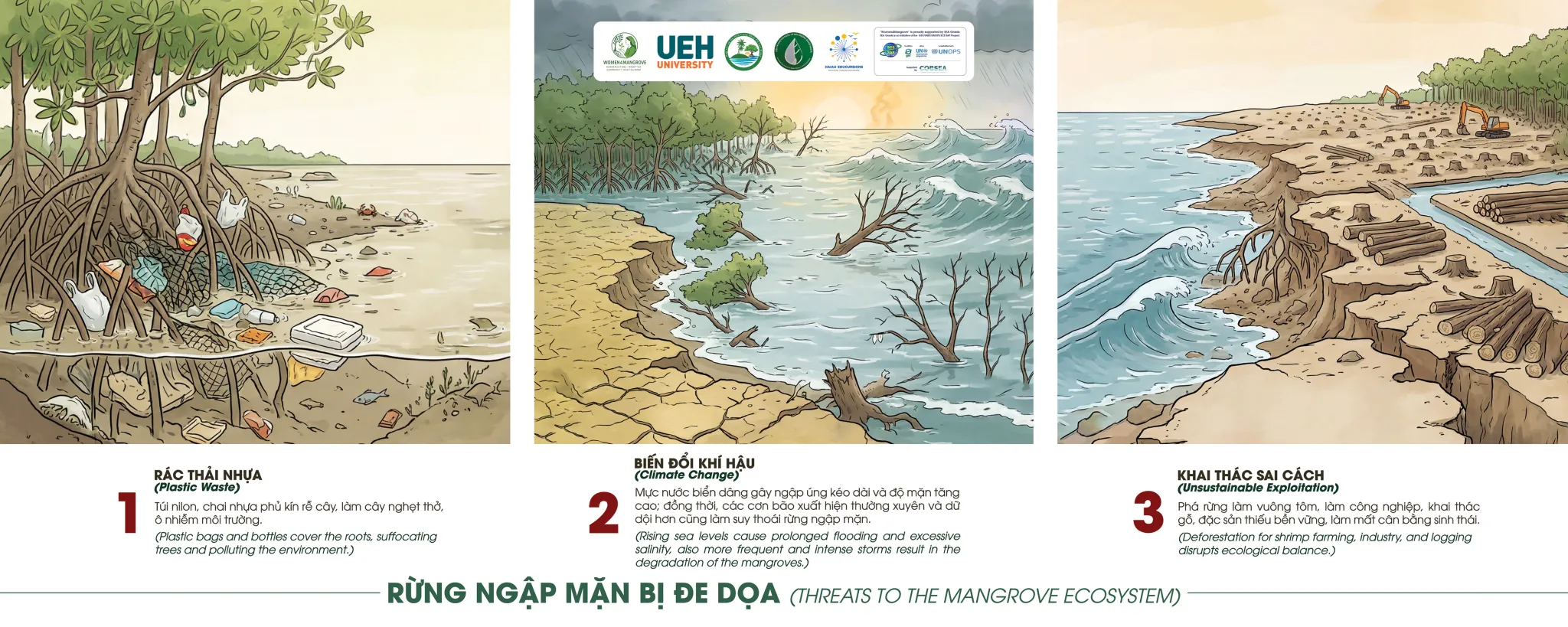
The Women4Mangrove educational campaign highlights three major threats affecting Cù Lao Dung and many coastal regions worldwide.
Plastic Pollution
Plastic bags, bottles, and waste become trapped within mangrove roots, suffocating ecosystems and damaging wildlife habitats.
Plastic pollution not only harms biodiversity but also weakens the natural filtration capacity of mangrove systems.
Climate Change
Rising sea levels, stronger storms, prolonged flooding, and increasing salinity place enormous stress on coastal ecosystems.
Mangrove forests are resilient — but they are not invincible.
Without restoration and protection efforts, climate pressures may outpace the ecosystem’s ability to recover naturally.
Unsustainable Exploitation
Illegal logging, poorly planned shrimp farming, and uncontrolled coastal development continue to destroy mangrove habitats across Southeast Asia.
When forests disappear:
- Coastal protection weakens
- Biodiversity declines
- Fisheries collapse
- Community vulnerability increases
The loss of mangroves is not only an environmental issue.
It is also an economic and social issue.
Women4Mangrove: Restoring Forests Through Community Action
The Women4Mangrove initiative offers a different model for conservation — one rooted in local participation, women’s leadership, and regenerative livelihoods.
Rather than separating environmental restoration from community survival, the project integrates both.
The initiative focuses on:
- Women-led mangrove nurseries
- Seed propagation and reforestation
- Environmental education
- Sustainable tourism
- Mangrove-based products
- Community capacity building
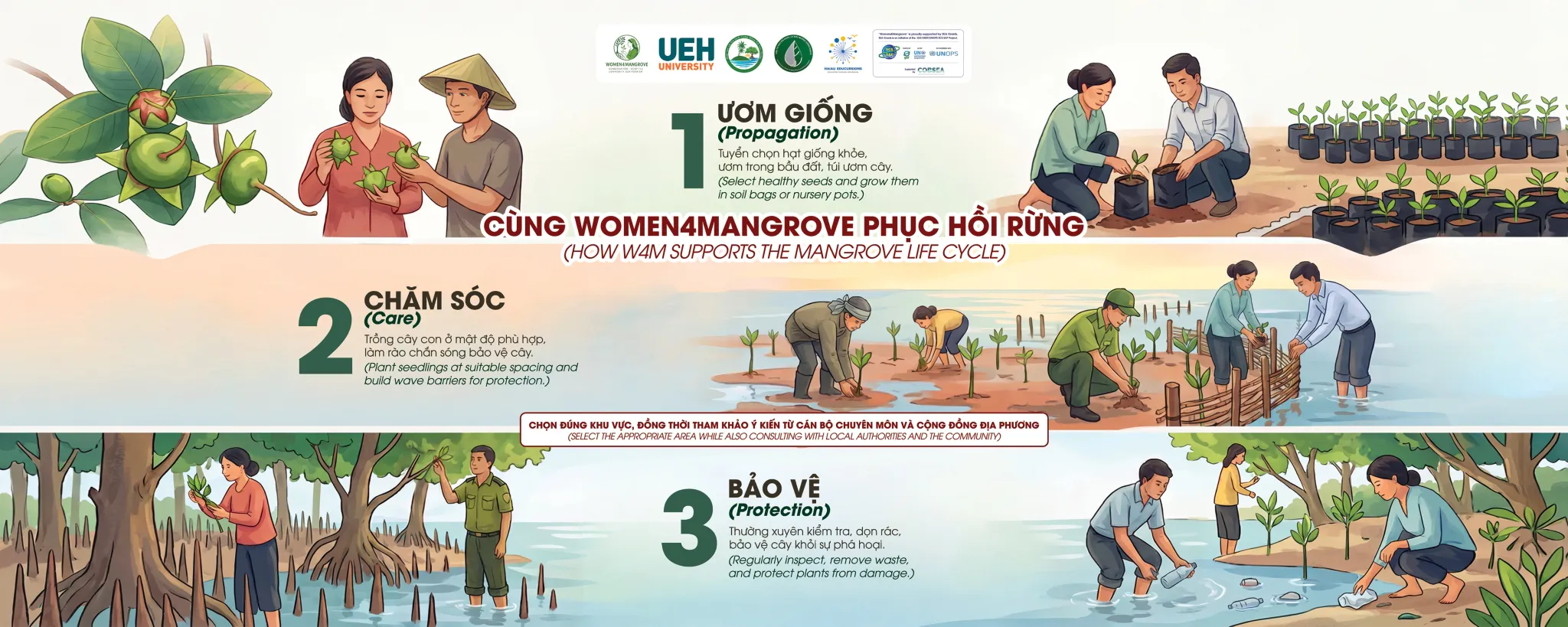
Women participating in the project help:
- Select healthy seeds
- Grow seedlings in nurseries
- Replant coastal zones
- Build protective barriers
- Remove waste from mangrove areas
- Educate younger generations about conservation
The restoration process is both ecological and social.
It restores forests while strengthening local resilience.
Conservation Must Support Livelihoods
One of the most important lessons from Women4Mangrove is that long-term conservation cannot succeed without economic opportunity.
The project therefore creates sustainable livelihood systems connected directly to ecosystem protection.
Mangrove-Derived Products
Women cultivate and process products derived from mangrove ecosystems, including:
- Sonneratia blossom herbal tea
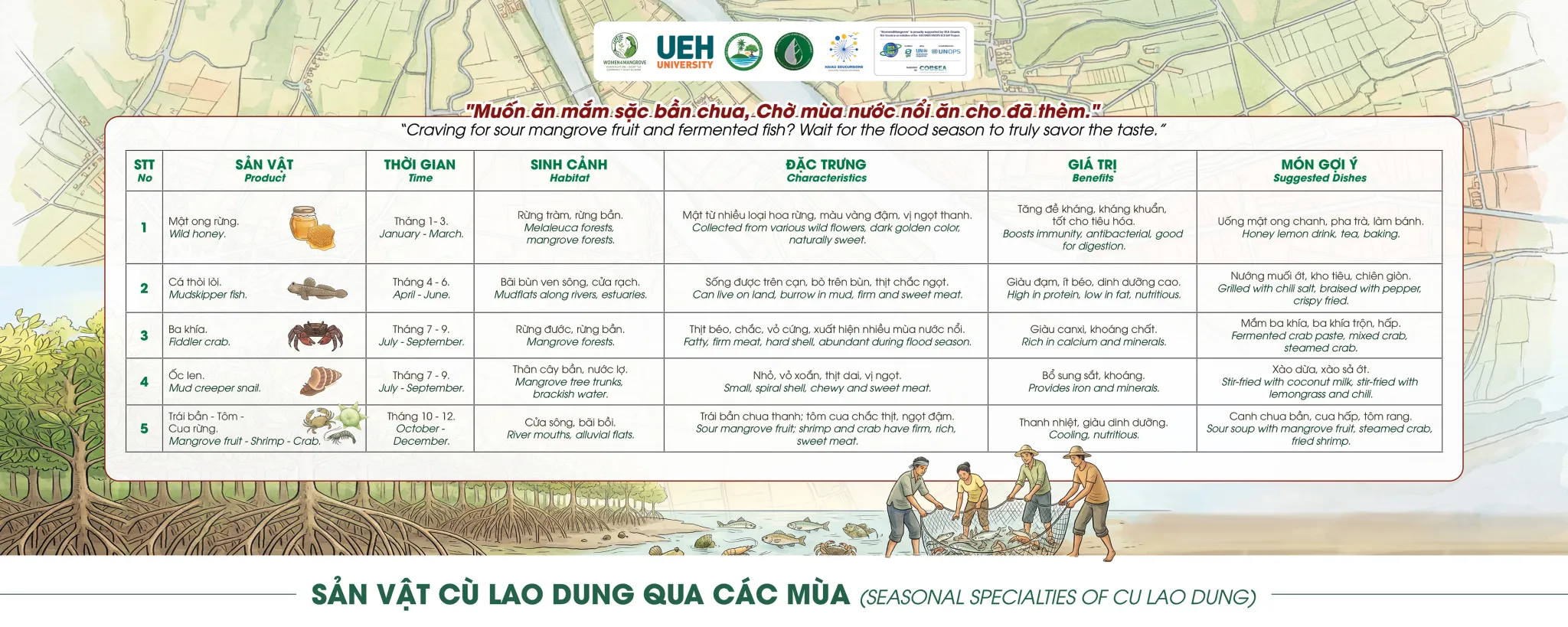
- Local food specialties
- Traditional products linked to local culture
These products generate income while encouraging communities to preserve the forests that sustain them.
Community-Based Eco-Tourism
Women4Mangrove also promotes regenerative tourism experiences that connect visitors with ecology, culture, and conservation.
Activities include:
- Mangrove forest tours
- Wildlife observation
- Educational workshops
- Traditional cooking experiences
- Local craft activities
- Community homestays
The project transforms tourism into an educational platform where visitors learn how ecosystems, culture, and livelihoods are interconnected.
Education Is the Foundation of Conservation
Environmental protection is not only about large-scale policy.
It also depends on daily behavior.
The Women4Mangrove educational materials encourage communities and students to:
- Avoid littering
- Reduce single-use plastics
- Respect wildlife habitats
- Join environmental programs
- Speak up against environmental destruction
- Share conservation stories with others
These actions may appear simple, but they create cultural change over time.
And cultural change is essential for long-term ecological recovery.
A Model for the Future of Coastal Communities
The Women4Mangrove initiative demonstrates a broader truth about sustainability:
Healthy ecosystems and healthy communities cannot be separated.
When women are empowered as environmental leaders:
- Conservation becomes more inclusive
- Communities gain economic resilience
- Local knowledge becomes part of environmental solutions
- Younger generations become more engaged in climate action
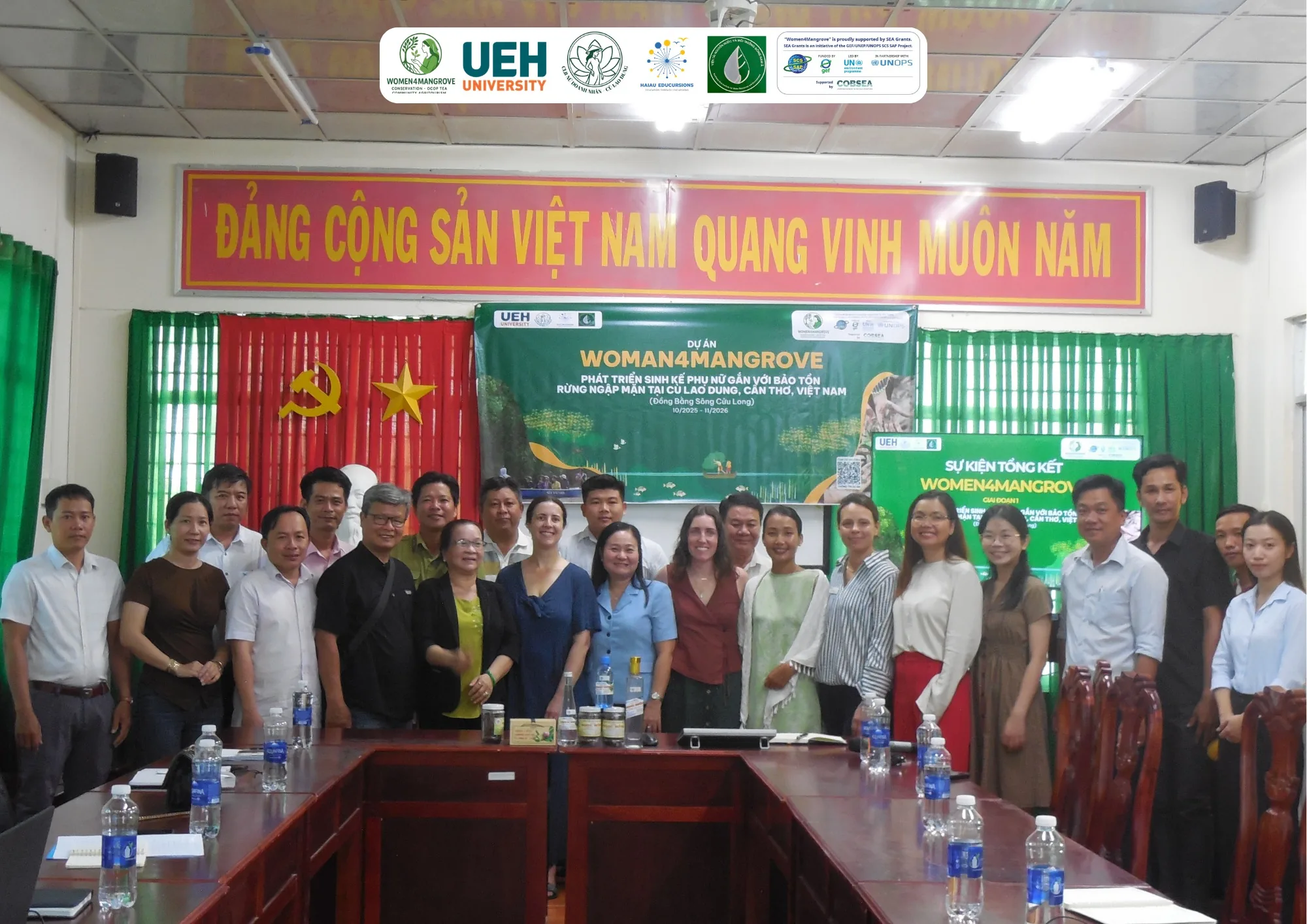
Supported by UEH University, local organizations, and international environmental partnerships including UNEP, GEF, and UNOPS, the project is becoming a living model of regenerative conservation in Southeast Asia.
What Mangroves Teach Us About Resilience
Mangrove forests survive where land and sea constantly collide.
They endure tides, storms, shifting sediments, and changing environments.
And perhaps that is why they offer such a powerful lesson for humanity today.
True resilience is not built through isolation.
It is built through connection.
Connection between ecosystems and communities.
Connection between science and indigenous knowledge.
Connection between environmental restoration and economic opportunity.
Women4Mangrove reminds us that protecting nature is not only about saving forests.
It is about creating a future where both people and ecosystems can thrive together.