How Women4Mangrove Is Restoring Ecosystems, Empowering Communities, and Building a Sustainable Future
In the coastal landscapes of Vietnam’s Mekong Delta, mangrove forests are far more than clusters of trees growing along muddy shorelines. They are living ecosystems that protect coastlines from erosion, provide shelter for countless species, store carbon, support fisheries, and sustain local livelihoods.
Yet these forests are under growing pressure.
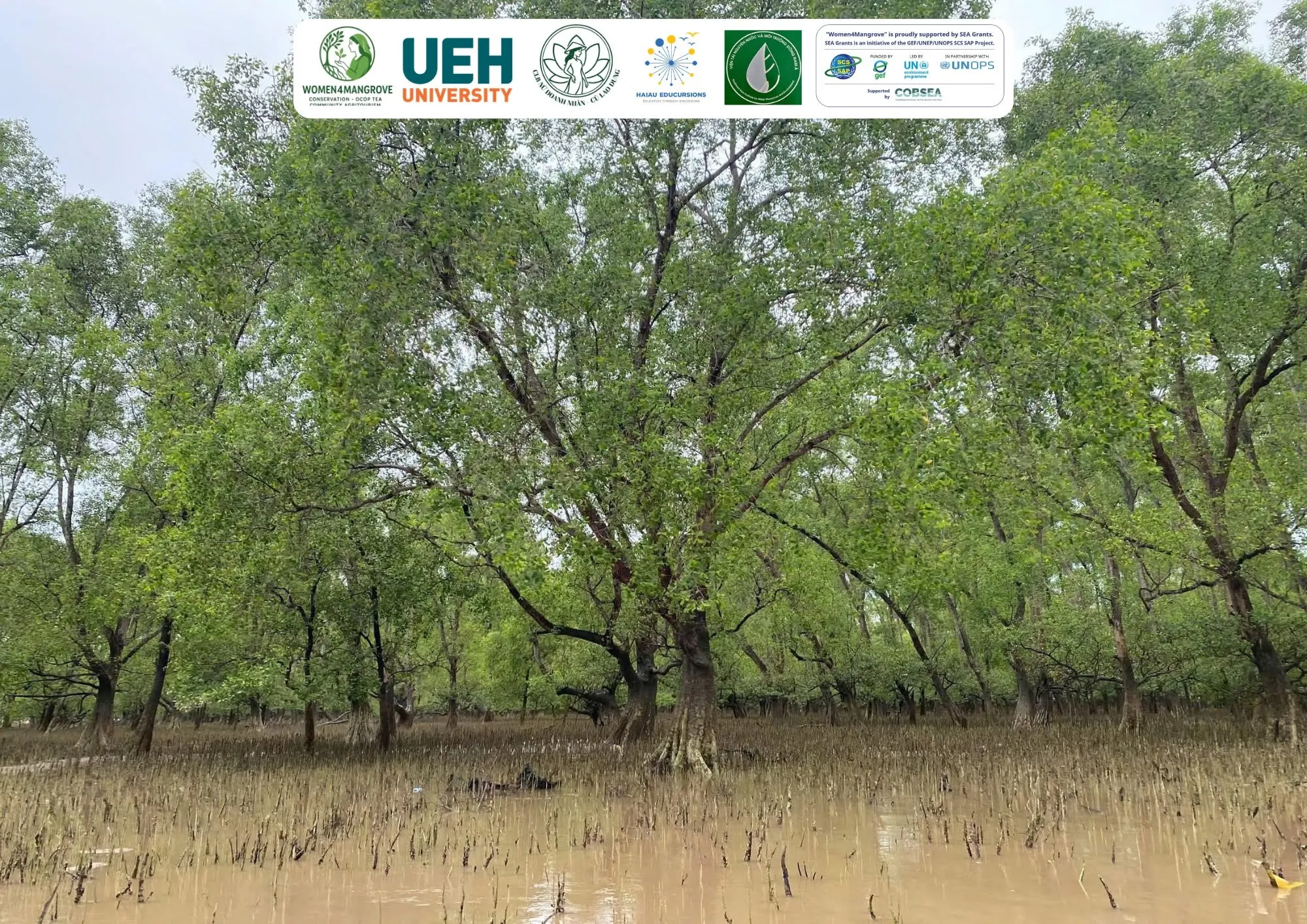
In Cù Lao Dung Island — home to one of Vietnam’s largest Sonneratia caseolaris mangrove ecosystems — decades of unsustainable shrimp farming, illegal logging, erosion, and climate change have threatened both biodiversity and community resilience.
Amid these environmental challenges, a powerful community-led initiative is emerging: Women4Mangrove.
The project is transforming mangrove conservation by placing women at the center of ecological restoration, sustainable tourism, environmental education, and regenerative livelihoods.
Why Mangrove Forests Matter
Mangrove ecosystems are among the most productive and important natural environments on Earth.
They act as natural barriers against storms and rising tides while creating breeding grounds for fish, crabs, shrimp, birds, and countless marine species. Research conducted in Cù Lao Dung also shows that mangroves significantly reduce wave energy and help stabilize sediments, making them essential for coastal protection.
But mangroves are more than environmental infrastructure.
They are deeply connected to human life.
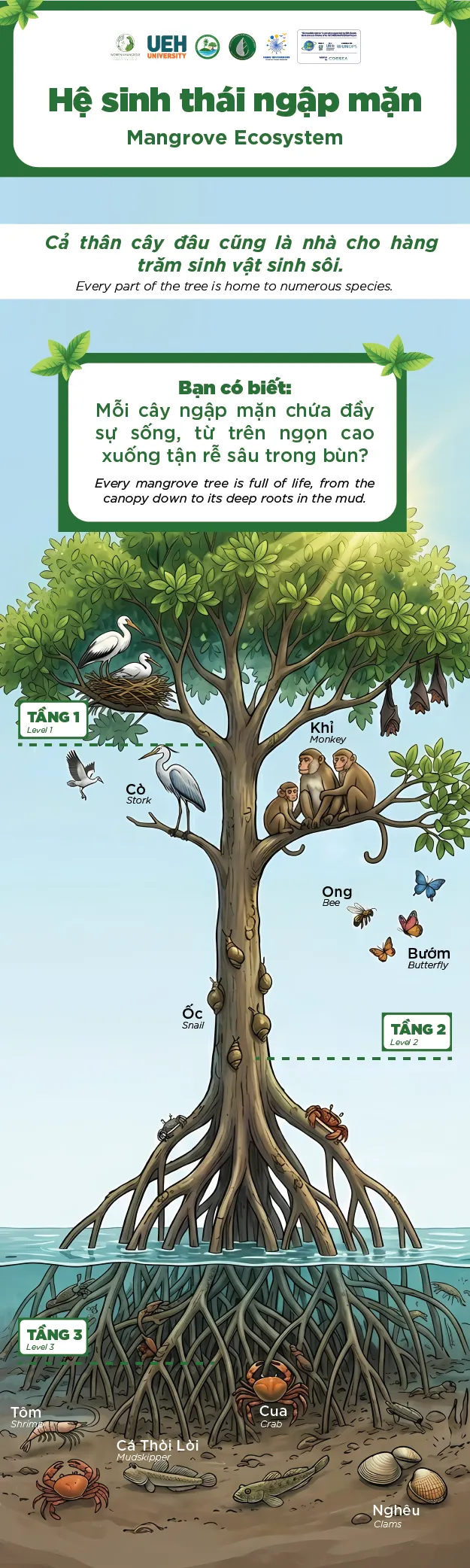
As highlighted in the Women4Mangrove educational infographics, every part of a mangrove tree becomes home to wildlife — from monkeys and birds in the canopy to crabs, mudskippers, shrimp, and shellfish beneath the roots. These ecosystems support biodiversity both above and below the waterline.
When mangroves disappear, communities lose not only environmental protection, but also food sources, tourism opportunities, and cultural identity.
Women as Guardians of the Forest
One of the most inspiring aspects of the Women4Mangrove initiative is its focus on women-led conservation.
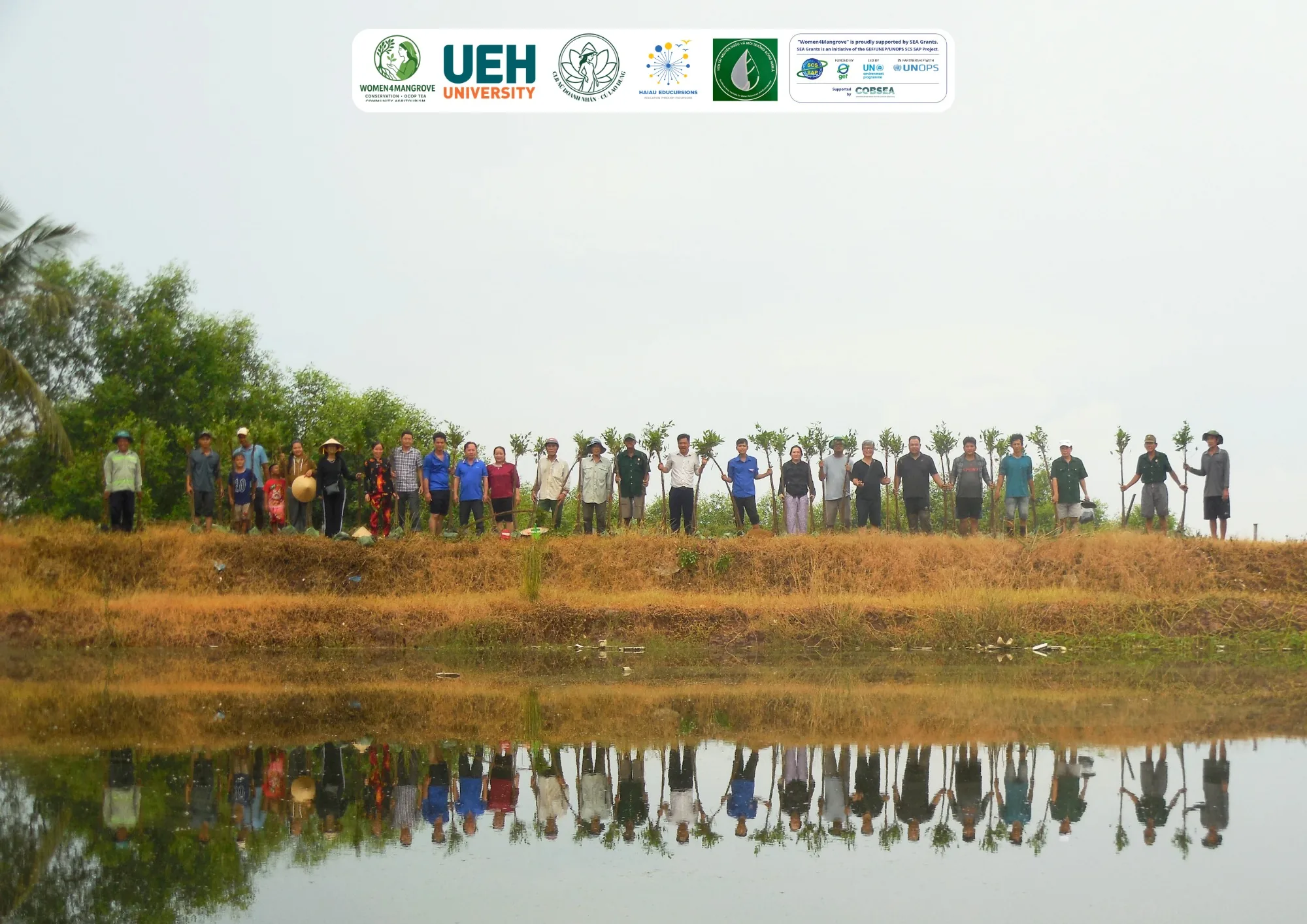
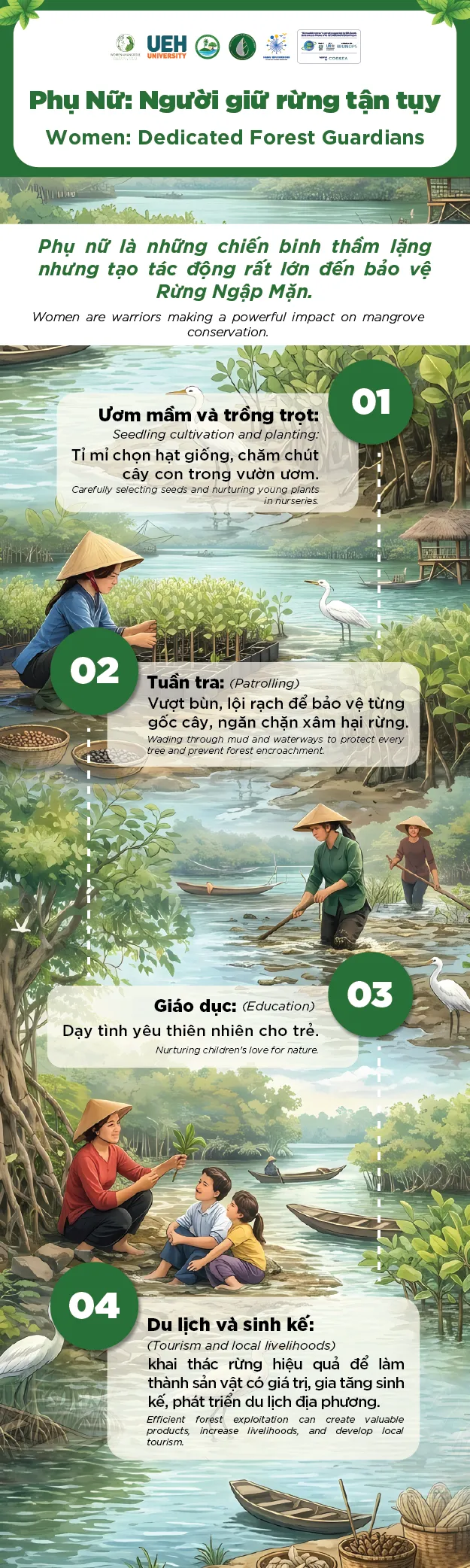
Across Cù Lao Dung, women are becoming key drivers of ecosystem restoration through hands-on environmental work and community leadership. According to the project, women participate in:
- Mangrove nurseries and seed cultivation
- Forest patrol and monitoring
- Environmental education for children
- Sustainable tourism development
- Community enterprises connected to conservation
The educational materials from the project describe women as “silent warriors” whose daily efforts create lasting impacts on forest protection and local resilience.
Rather than separating conservation from economic survival, Women4Mangrove connects environmental restoration directly to livelihood opportunities. This approach recognizes an important reality: conservation succeeds when communities can thrive alongside nature.
Turning Conservation Into Sustainable Livelihoods
Traditional conservation efforts often struggle because local communities depend heavily on natural resources for survival.
Women4Mangrove addresses this challenge by building regenerative economic alternatives that support both people and ecosystems.
The project develops community-based livelihoods through:
Mangrove-Based Products
Local women cultivate and process products derived from mangrove ecosystems, including herbal tea made from Sonneratia blossoms. These products generate income while encouraging long-term forest protection.
Eco-Tourism and Cultural Experiences
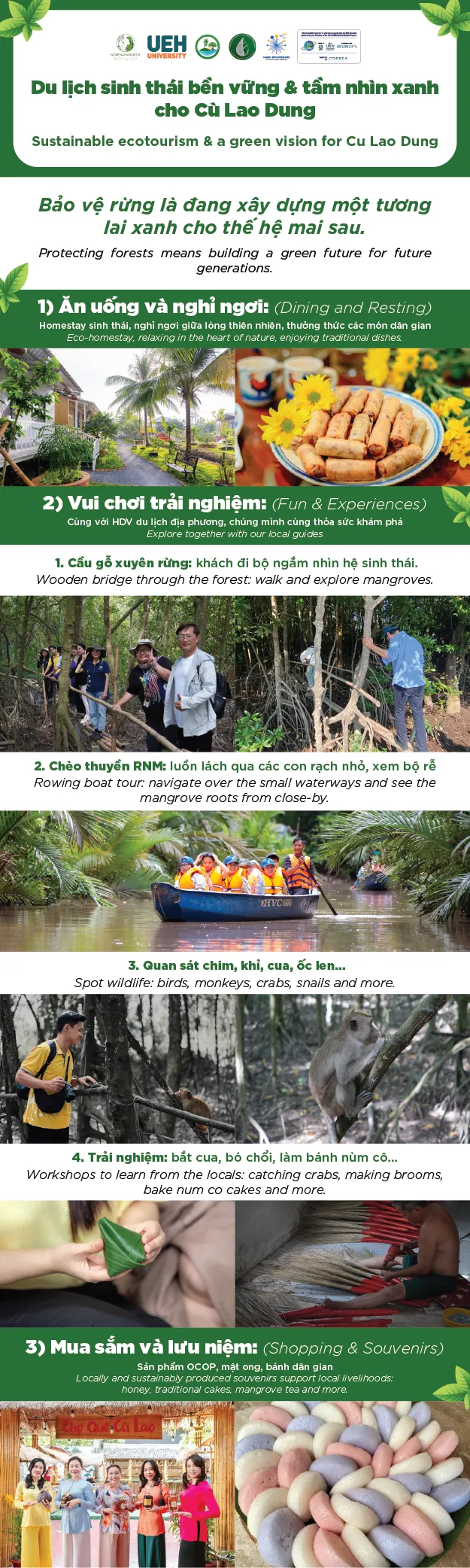
Visitors can explore mangrove forests through guided boat tours, educational programs, homestays, and cultural experiences designed together with local communities.
Activities include:
- Walking through mangrove forests
- Observing wildlife
- Learning traditional crafts
- Participating in conservation activities
- Exploring Khmer-Vietnamese cultural heritage
- Experiencing local cuisine and OCOP products
This model transforms the forest from a resource to exploit into a resource to protect.
Education as a Tool for Long-Term Change
One of the strongest educational messages within the Women4Mangrove campaign is that environmental protection begins with everyday behavior.
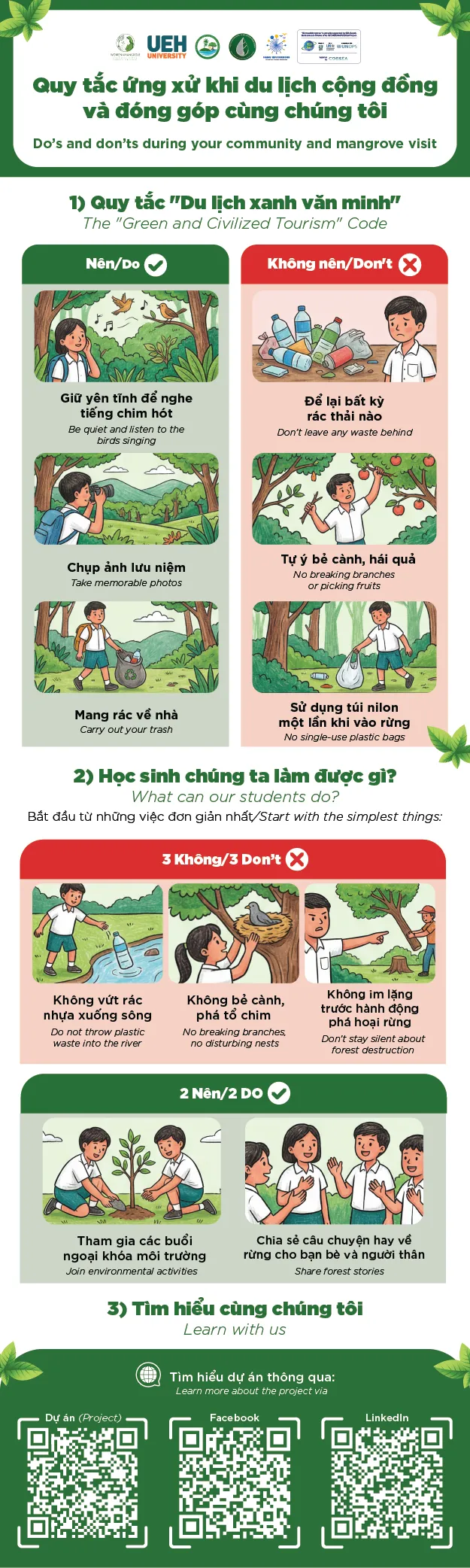
The project’s educational infographics encourage visitors and students to:
- Avoid littering
- Reduce single-use plastics
- Respect wildlife habitats
- Participate in environmental activities
- Share conservation knowledge with others
These seemingly small actions create long-term cultural change.
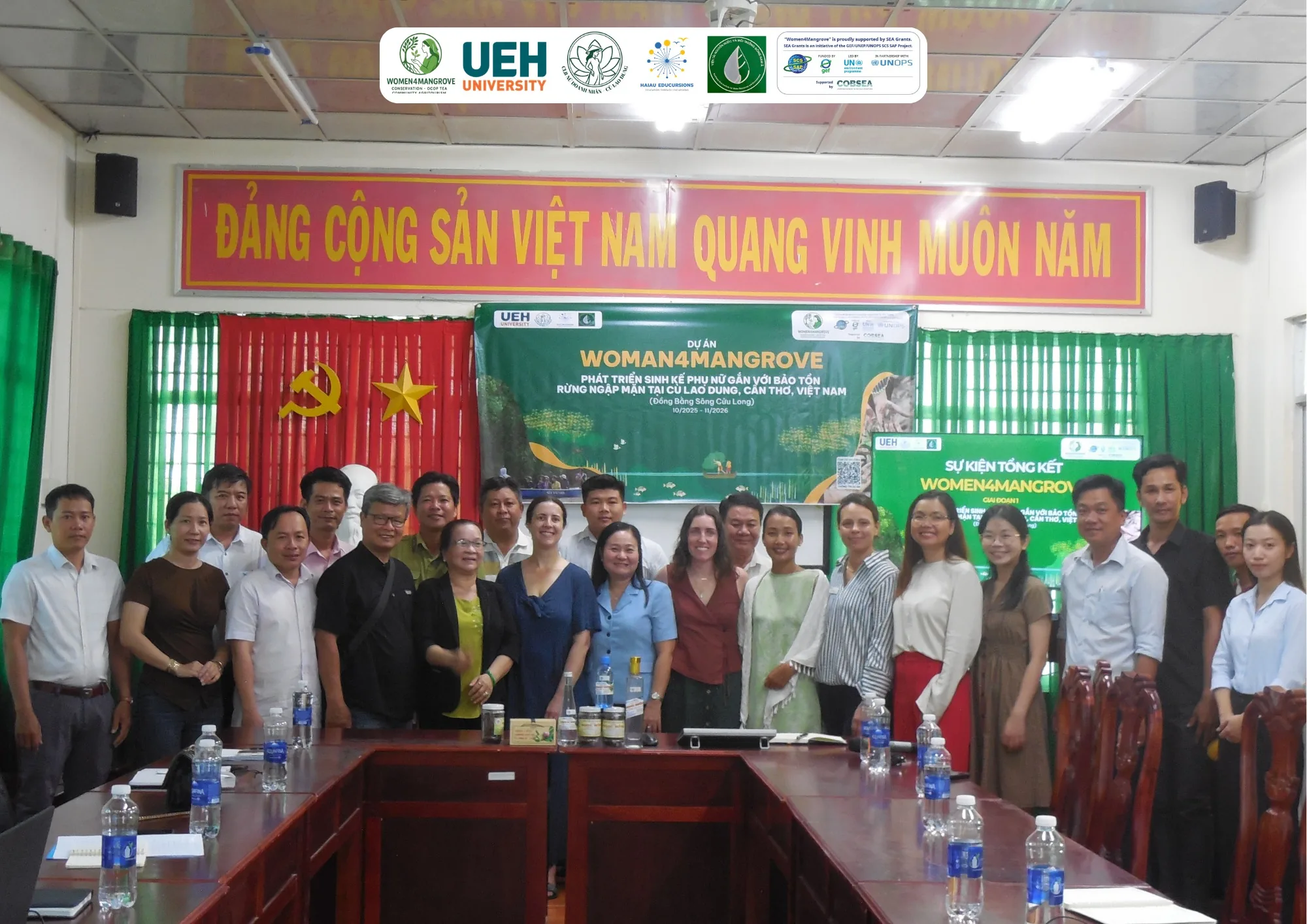
Women4Mangrove also works closely with universities, researchers, local authorities, and NGOs to strengthen environmental education and community training.
By combining local knowledge with scientific collaboration, the project creates a practical model for community-based climate resilience.
Sustainable Tourism Can Protect Nature
Tourism is often viewed as a threat to fragile ecosystems.
But when developed responsibly, tourism can become a force for conservation.
Women4Mangrove promotes a model of sustainable eco-tourism where visitors actively learn about mangrove ecosystems and contribute to local livelihoods. Instead of mass tourism, the focus is on:
- Small-scale community experiences
- Environmental education
- Cultural preservation
- Regenerative travel
- Local economic participation
This creates a more meaningful relationship between travelers and destinations.
Visitors do not simply observe nature — they understand why it matters.